- podcast
- NEWS
The AICPA’s CEO on trust, AI, and the profession’s future
Sponsored by Practising Law Institute
AICPA President and CEO Mark Koziel, CPA, CGMA, reflects on his first 18 months in the role, discussing initiatives such as CPA Trust, the return of the print Journal of Accountancy, and the profession’s ongoing advocacy efforts. Speaking while at AICPA ENGAGE in Las Vegas, Koziel also shares insights on AI, upskilling, tax transformation, licensure mobility, and the role CPAs can play in a rapidly changing business environment.
Koziel explains why he remains optimistic about the profession’s future despite ongoing disruption and uncertainty.
He also tells the story of being asked long ago for an autograph.
What you’ll learn from this episode:
- Why the CPA Trust campaign launched and particulars about the strategy for a commercial about the initiative.
- What Koziel meant when he said, “We are in the verification business.”
- What member feedback revealed about the need for upskilling and how the Profession Ready Initiative aims to address skills gaps.
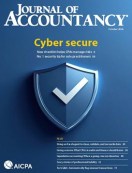
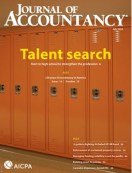
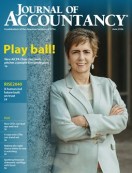
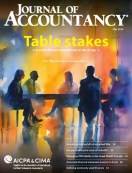
- Why Koziel considers it valuable for members to have the Journal of Accountancy return to printed issues.
- How AI could reshape tax compliance work and expand opportunities for advisory services.
- Why he says, “Train’s left the station,” when asked about changes in CPA licensure pathways.
- Koziel’s assertion that CPAs will continue to thrive amid technological disruption by serving as the “human in the lead.”
Play the episode below or read the edited transcript:
— To comment on this episode or to suggest an idea for another episode, contact Neil Amato at Neil.Amato@aicpa-cima.com.
Transcript
Neil Amato: Hello, listeners. Welcome back to the Journal of Accountancy podcast. This is Neil Amato, and this episode is one of several summer episodes you’ll hear recorded the second week of June at ENGAGE in Las Vegas.
Today’s episode is a conversation with Mark Koziel, the president and CEO of the AICPA and also the CEO of the global Association of International Certified Professional Accountants. We looked back on his first 18 months on the job. We also looked ahead. You’ll hear that conversation after this brief sponsor message.
[Sponsor message]
Amato: We welcome Mark Koziel to the podcast. Mark, we’re glad to have you back. Thanks for making time.
Mark Koziel: Thanks, Neil. Great to be here.
Amato: It is the second afternoon of ENGAGE. This episode’s set to air a little bit later in the summer, but we’re gonna think about some of the things that are top of mind now, but also a little looking ahead in the profession. You kicked off ENGAGE yesterday with the announcement of CPA Trust.
There’s also good news on the accounting enrollment front, the numbers. Any extra context you’d like to provide on those two topics?
Koziel: You know, CPA Trust, I think first and foremost, when I came in in January of 2025, Sue Coffey and her team talked to me about this, and we just wanted to remind the business community and the regulatory and legislative community that we are the trusted profession.
And so we had a lot of conversation around that. What does that look like? Social media campaign, yeah, that’s easy. Then we started a debate back and forth about having a commercial. And so we did. We found a firm to be able to do it.
Then we went after kind of like a nontraditional way of having that produced. And where are we going to go with it? We’re going with it in news media, cable news, where many of the business leaders — I know myself, I mean, I’m usually catching up on morning news on one of the cable networks or business news on one of the business news cable networks. And we said that’s where we need to live. We need to live there for the business leaders and for the regulatory community.
We thought first maybe DC only, or DC and New York. And then it turned out that we were able to do a national buy on that. But again, very focused. We’re not here to be in prime time and try and reach everybody. There’s a lot of waste in that type of buy. So being judicious about how we’re gonna put that campaign together, and it’s a great time to do it.
You know, the other day, the Great American AI Act dropped, and in that bill, they’re talking about verification of certain things around AI, and we are in the verification business. That’s who we are. We are auditors, we are trusted, we are assurance providers, and there’s some semblance of assurance we could provide over that. So timing actually is perfect in bringing this out.
Amato: I was going to get to AI later, but since you brought it up, that legislation, the profession — is it that trust-but-verify mode? So, balancing AI with the quickness it can do things, but also how you verify and some of the concerns around that that may still be lingering.
Koziel: You know, we had the Rise2040 project that has gone out to our members. We actually looked at how our results of CPA Horizons 2025 resulted. And then looking forward into Rise2040, who do we need to be? And from our members came the idea of the human in the lead. A lot of people are talking about the human in the loop. It’s the human in the lead.
And we see great opportunity in the finance function for those in business and industry, and then in the public accounting function, in providing assurance over AI controls that are put in place by the finance teams in doing things. Finance teams being partners with business leads, helping with appropriate prompting, helping with verifying that the results that the person is looking for can be validated in a way that they could trust the data, they could trust the prompts that were done and say, yep, this is good and partnering in that aspect.
So that is all part of, I believe, what the ecosystem is. We are worried that there’s going to be the Wild West of AI regulation and standards over it. We want to see consistency in that. That’s where we think the federal government coming out with this AI act now is good. There’s been like over 1,700 individual bills that have been introduced in various states around the country for a variety of things that seem to be AI-related. We’re going to need consistency here, and same thing at the international space.
So the fact that AI has been the most invested in the U.S. makes sense for the U.S. to set some level of framework or standard around that, that maybe the rest of the world can use, too.
Amato: You mentioned the Rise2040 initiative. I talked for an earlier JofA episode with Carl Mayes about the Profession Ready Initiative. There’s been a lot of listening to members. Obviously, that’s center stage here because there’s so many people together. How would you sum up, one, how good a listener are you? And two, what are you hearing from the members on kind of their key pain points?
Koziel: It was important to me when I came back to the AICPA, so I had a five-year hiatus from mid-2020 to the end of 2024, where I went to work for a firm association that I was recruited to. So recruited back to the AICPA and CIMA in January of 2025. And I wanted to listen. I wanted to hear what our members had to say.
We created a separate email address, askmark@aicpa-cima.com. During the short, however many months early on, there were over 2,000 responses that were in there, and I answered each and every one of those. It took a little doing, a couple of weekends along the way, but we did. We stayed timely with it.
And also having the benefit of our chair and co-chair of the association, our chair being Lexy Kessler from the AICPA, our co-chair being John Graham, the president of CIMA. They both, too, wanted to [learn] through true listening. And that’s what brought us into the Rise2040. And we had already adopted very quickly a lot of things that I was hearing in the market. So CPA Trust and the commercial, definitely part of it. We were going to do CPA Trust already, but the commercial came out of it.
Bringing print, JofA print, back —
Amato: Yeah, you scooped me on that question. That was coming. So yeah, we’ll talk more about that.
Koziel: Our members were asking, and I said, yep, all right, let’s figure it out.
But then I think the biggest thing and the most commonality that we had between the entire Association globally was around upskilling. And this wasn’t about AI and AI replacing functions of what we do; it happened well before that. What we’re asking new associates to do entering the profession today, whether in business and industry or in public accounting, it’s far different than what it was for me 30 years ago. The blocking and tackling, the debits and credits, as we say, they’re not doing that anymore.
What they’re doing now is they’re being asked to analyze the debits and credits or to analyze accounts receivable when they’ve automated the entire process of auditing AR and doing confirmations, and they’re asked to say, OK, use your critical thinking skill to determine whether or not this is accurate and appropriate and how you’re gonna finalize the comment.
They’re like, I don’t even know how to audit AR because I’ve never done it. I heard the theory when I was in school, but I’ve never really done it.
And so for us, the Profession Ready Initiative is from that listening of upskilling, that everybody needs to focus on it. And we do believe we have a simulation tool that we’re going to offer to the market. We’re doing research on that right now, but really excited about answering the call of our members to say upskilling is a necessary thing and we need help.
Amato: Yeah, so it seems like definitely some gap filling as part of that. I was gonna go back to that JofA question that you did scoop me on, and you didn’t know the list, but has anyone asked you to autograph your welcome letter in the June print edition?
Koziel: No one had asked me to autograph yet. So, and I’m hoping they don’t. It’s not gonna be worth much in the open marketplace.
I have a funny story for another day. When I was working part time at a sporting goods store, I was with my boss at a football banquet and there were kids that were coming out asking people for autographs. I’m at the head table and a guy who thought he was famous next to me, a kid asked him for an autograph. The kid comes over to me and says, you know, “Can I have yours, too?” And I’m like, “Kid, I’m nobody. You don’t need my, you don’t want my autograph.” And he points to the other guy. He says, “That’s OK. I didn’t know him either, but I got his.” And that guy was all upset about it, but nobody really wants it.
Amato: That’s funny. But on the JofA print, for you, it was a thing members were asking for. So why was it important to get that back?
Koziel: I think there’s a number of things. I do think summarization and people having that hard copy in their hand to feel it and realize it. I think, first and foremost, for a number of years now, we have over-emailed our members. We’ve always tried to manage the number of emails. And part of it is, it’s been a slippery slope, because we ask members what they’re interested in. And from their interests is what we try and email them with.
If someone is a tax professional, they do tax all day long, and they say, but I’m interested in A&A because I need to know it for the occasion that my client’s going to bring it up to me. So I’m going to put A&A as an interest. So now they’re getting double the emails because they’re getting all the tax emails. Now they’re getting all the A&A. And we’ll sort that out eventually. But our [Engage365] communities now are pulling people out of that.
I think that because of that and the opt-out rate of our emails, that many of our members then weren’t as well connected to us. And we’d send an email, hey, the new JofA is up. OK, great. Well, if I’m not getting that email, how do I know? And when it’s mailed to you, you get it. And even if you say, OK, I’m not going to get to it today. Back in the old days of my JofAs, I’d pile them up and then I’d start going through them. And some of the things were already outdated by the time I read it because of legislation that moves and standard setting and all those things. So I could then focus on the things that were still going to be important to me as I went through it.
And now we’re doing quarterly, which I think is a great way to do it, to summarize what’s happened in the last quarter and keep it relevant and having the QR codes in there like never before that really direct-link our members back into our website for something that they care. They get to choose where they need to go on the website based on what they read in the JofA. So, for me, member benefit that they stay connected then better to the AICPA and being able to get that relevant content. And hopefully on a quarterly cycle, every three months, they don’t have to worry about piling up three issues in a row. They get everything they need to know in one concise issue.
Amato: Again, we’re recording in June at ENGAGE in Las Vegas. Looking ahead to the second half of 2026, what are some of the critical things on your radar for the profession?
Koziel: Obviously, regulatory and legislative, right? And what’s going to happen with all that? I’ve been actively involved in conversations with the SEC, PCAOB on the public company space. I think the tax transformation that’s happening right now is going to happen exponentially fast. That we’re going to see some players out there who could say that they could take over your entire tax compliance with an AI agent to be able to do that.
And so, you know, getting our members ready for that, tax advisory. We have our tax team at the AICPA, and there’s a group at CPA.com. They’re working together to really prop up tax advisory. That’s what the future’s gonna be. We’ll always be in the compliance business, but it’s gonna be such a fraction of what we do, physically or based on humans. We’re gonna review what the AI tool does, but that’s gonna be the extent of it.
So I think getting all of that ready, implementation of Rise2040. We have an AI tool for Rise2040, and we’ve been showing it here at our exhibit hall. And you could say, I am a sole practitioner in North Carolina who only does tax. What do I need to know for the future? And then it just spits out all the things that you need to know. Or, I’m a CFO in business in construction in the Midwest. What do I need to know? And all of that is based on all the feedback. All of those folks that are going in there, they’re also providing additional inputs and the trends that they’re seeing. So they’re adding to all of the data that we’re providing in that. So it’s really exciting.
Amato: Former Costco CFO Richard Galanti, he mentioned a phrase you’ve used today, January 2025. That was when he retired from Costco. You’ve been on the job now 18 months. How are you settling in?
Koziel: You know, it’s like I never left. It’s the old home week when I got back. A lot of people have asked me, like, any surprises? I can’t say there really were. A number of things when I first started, and this was always the routine: I was here during the Madoff days, and so we had crisis management for the profession around that. We had the recession of ’07, ’08. We had just a variety of things that have hit the profession along the way, and you get a little reactionary towards that, and it’s always gotta get incorporated in.
When I started January of 2025, so I started getting briefed. I met with Barry [Melancon] as he was leaving a number of times, and he briefed me incredibly well, met with the team.
And as I was coming in, Ohio was the first to pass and bringing back an additional pathway to licensure, bachelor’s plus two years plus exam. But by the time I started between when they passed that and I started in January of 2025, there were already a number of other states who were already introducing or have introduced legislation to do the same thing.
So I came in and people asked me the question, what is your opinion of 150 versus bachelor’s? I said, it doesn’t matter. Train’s left the station; now let’s get it done as quickly as we can and with as little pain as possible to our members around mobility. We have to make sure we could do everything we possibly can around mobility. It is ugly right now, it’s nasty, and it’s going to be until we get through all this and being able to set things around it. But I don’t know that mobility was ever super clean, even under the 150 hours, because there were still nuances in regulation.
So you had that. You had the Big Beautiful Bill. It was six months in, and there was legislation that wasn’t kind to CPAs or pass-through entities of professional service firms, SSTBs as they’re called, and getting to work on that. But these were all the things, and they just kind of get incorporated into the day-to-day.
I leaned in a little bit more internally, hearing where some of our members’ frustrations were, bringing that back and focusing on the things that we need to do differently around that. So, you know, I really was, I was comfortable coming in and I’ve said, you know, not to toot my own horn, but I don’t know how anybody could have walked into this not having the 14 prior years that I had at the Institute and at the Association, understanding all of the nuances that we have. So, you know, I was able to hit the ground running, and I feel like it’s been very little blips or stalls in what we needed to do based on having leadership transition.
Amato: So in a shout-out to JofA editor-in-chief Jeff Drew, who’s one of the key orchestrators of that print edition, he always likes to ask this as a last question in a podcast: Is there anything today I haven’t asked you that I should have?
Koziel: No, I think — well, is the future bright, maybe? You know, I am bullish —
Amato: I considered that, but I didn’t. So now you can ask, you can answer that one.
Koziel: You know, it’s funny because, I don’t know, I just get, I think we are all really anxious and apprehensive. And it’s a time of relative unknown. But I am bullish about this profession. You know, we are so resilient. We have been through so many things in our 139 years of the AICPA here in the U.S.
And I don’t know what we all did to society that every time there’s some level of an innovative transformation, society wants to put us out of business, right? The spreadsheet comes along. Oh my God, accountants are going to be out of business.
They don’t have to use a 10-key anymore. Although, no, my audit partners made me still foot the Excel file to make sure that Excel calculated it correctly back in the day. Now we trust that.
We actually look at the formula, we know it’s now going to happen very differently, but Excel, the personal computer, fast forward into where we’re at now, TurboTax for our small tax professionals, oh my God, everybody’s going to be able to do their tax return themselves. Small firm CPAs are not going to be needed anymore. For some small firm CPAs, they tell you that TurboTax is their best advertisement because somebody messes up so bad, they can charge double to the client when they actually bring it back to them and say, “You made a mess of this. Now we’ve got to unravel it.”
And then you look at blockchain. When blockchain came out, we’re not going to need audits anymore. We’re not going to need accountants anymore. Now we’re here at AI. We’re hearing the same thing. And yet it’s going to be the human in the lead. It’s going to be the finance function that’s going to have the controls over it. I see the future is incredibly bright in who we are as a profession.
And I’ve been asked that question time and again: Would I do it again? I would absolutely have done it. I still would have joined this great profession of ours. I’m excited. We have a great future.
Amato: Thanks again to Mark Koziel for his time on the podcast. This is Neil Amato. Thanks for listening to the Journal of Accountancy podcast.