Adding externships to attract more talent
Learn how one firm has taken a new approach to reach students earlier and expand its recruiting pool.
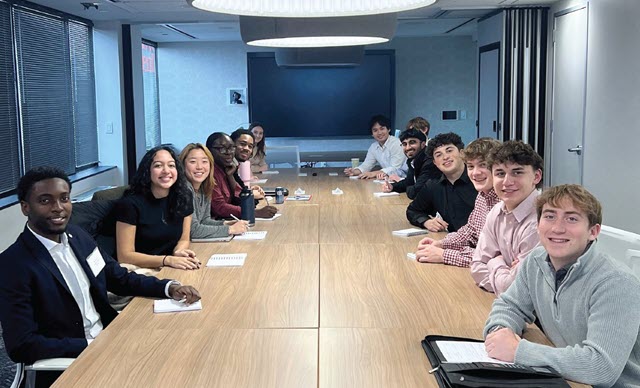
College internships are crucial for firms to cultivate talent, but some practices go a step further. They not only recruit juniors and seniors for internships that last two to three months but also freshmen and sophomores for much shorter experiences called externships.
GRF CPAs & Advisors, a full-service professional services firm based in Bethesda, Md., is one of those firms.
“Our externship gives freshmen and sophomores a chance to get their toes in the water,” said Gracie Healy, a senior human resources recruiter at GRF. “It’s a one-week paid program that helps them experience what a day in the life at a CPA firm feels like, even before they’ve taken their first accounting class.”
HOW ONE FIRM PAIRS EXTERNSHIPS AND INTERNSHIPS
Accounting students eagerly gather around job fair tables at the beginning of the academic year to compete for internships at the best firms. Internships are prized because they not only give students experience working in an accounting practice but often lead to job offers after graduation as well.
Externship expectations are different. While an internship can be seen as an audition for a job after graduation, externships are more about career exploration. Internships provide deeper training and more hands-on work, according to Jenna Womer, GRF’s talent acquisition manager. “[Externships are] more to give them the experience of what working at a CPA firm looks like, how it feels. They’re going to be around other partners or seniors, they have mentors, and they’re able to see what the day-to-day would look like. And it gives them a good insight into what to expect for the internship program when they would be with us for a longer amount of time.”
GRF’s externship program has grown since its inception. The 15 freshman and sophomore students who participated in January 2026 constituted the largest group to date. Student feedback was overwhelmingly positive, and some said they wanted to switch their majors to accounting after experiencing the program.
University of Maryland student Joselyn Salazar considered choosing her GRF externship one of the most meaningful decisions of her college career. “Sometimes the paths that alter our lives the most are the ones we decide to take a chance on, even if we don’t have all the answers,” she said. With an interest in marketing, she was initially hesitant to enter the program, but her curiosity gave her an opportunity to learn more about the accounting profession.
Sam Sharp, a student at Syracuse University, also valued his experience. “I especially valued working in small mentor groups and collaborating on associate-level work, which gave me hands-on exposure to real client audits,” he said.
Equally important was getting a look at GRF itself. “The externship also made a strong impression on me in terms of GRF’s culture, as it was clear how supportive, approachable, and invested the firm is in its people,” Sharp added.
Each GRF extern has a mentor and a peer “buddy.” The buddy system allows the externs to “bounce ideas off each other and to have that camaraderie between them. And it usually makes them feel more comfortable, too,” Healy said.
After the week, the externs write a one-page paper on a prompt they have been given by the firm. The paper is a way for externs to reflect on their experience. (See the sidebar, “Best Practices for a Successful Externship Program,” at the bottom of this article.)
WHY THE FIRM STARTED AN EXTERNSHIP PROGRAM
The focus of the GRF program is to provide externs a positive experience and to educate them about the firm, ultimately creating a talent pool for later recruitment.
“At the beginning, we have a presentation on who we are, who are the clients we serve, and what are the breakdowns of all of our different departments and how they work,” Healy said. “So the externs really get to know us as well as the industry.”
This year, the firm added a new presentation led by its NextGen Accountants Committee, which is dedicated to building the profession by educating and mentoring students in the community. The presentation offered a deeper dive into all services provided by the firm, including audit, nonprofit and for-profit tax, risk and advisory services, accounting technology services, and outsourced accounting and advisory services; the diverse clients they serve; and stories about different career paths their professionals have taken to get where they are today.
FINDING THE PERFECT CANDIDATE
Evaluating externship candidates requires a little more finesse than for internships. Internship candidates will have already taken at least a few accounting classes, have declared their major, and may even have some practical work experience. Externs don’t have that background and may not have taken any accounting classes at all.
Without a track record of accounting classes to examine, firms looking for externs judge candidates on other characteristics.
Healy advised potential externs to add a skills section to their résumés, even if they have no accounting background. “I want to see what computer platforms you are proficient in, whether that’s Word, Excel, Canva, or whatever you are familiar with. Any activities or organizations they’re involved in on campus, volunteer work, or interests that show commitment and dedication,” she said. “We’re not looking for years of work experience. We’re trying to evaluate each individual on who they are as a person.”
Externship participants have become a source of new candidates through positive word of mouth. “When I find a freshman or sophomore, that person will go back to their friends, and say, ‘Oh, there’s a company that takes freshmen and sophomores.’ So, we end up getting a bigger crowd later on at these events because of that,” Healy said.
GRF’S HIGH SCHOOL PILOT PROGRAM
To expand the recruiting stream further, GRF is experimenting with a third type of program that targets high school students. Meant as a supplement to the extern/intern program, GRF’s new high school pilot program is an experiment that tries to reach students before they get to college.
Beginning with two high school students, the program runs for the school year and is designed to rotate participants across multiple departments to give them exposure to different service lines.
“Our high school internship program is something new that we’re trying out for the first time ever this year,” Healy said. “They’ll have two weeks across a few different departments within our firm so they can get that exposure.”
GETTING A LOOK AT THE REALITIES OF PUBLIC ACCOUNTING
Firms continue to grapple with persistent talent challenges, and there is no single solution. Externship programs offer one strategy, as such programs engage students earlier in their academic careers. By introducing freshmen and sophomores into the realities of accounting, giving them an early look at the day-to-day work, and building excitement and enthusiasm, firms with externship programs can expand their recruiting pool while helping those students make more informed career decisions.
Programs like the one at GRF can form a highly effective bridge between that early interest and a long-term commitment to the profession.
Best practices for a successful externship program
A well-designed externship program can help firms engage students earlier in their academic careers, build long-term talent supply chains, and give participants a realistic view of public accounting.
Firms that have found success with externships tend to share several common practices:
Structure the program intentionally
- Keep the program short and immersive to accommodate academic schedules while delivering meaningful exposure.
- Focus on observation and exploration, not productivity; externships are about learning, not output.
- Provide a clear daily agenda so students know what to expect and remain engaged throughout the program.
- Base the program primarily on one service line, while offering exposure to other departments through presentations or shadowing opportunities.
Set clear expectations
- Communicate upfront that externships are introductory experiences, not internships.
- Emphasize that students are there to observe, ask questions, and learn, not to master technical skills.
- Explain how the externship fits into the firm’s broader talent pool, including how it may lead to future internships.
Create a positive student experience
- Assign each extern a mentor and a peer “buddy” to foster comfort and connection.
- Allow externs to sit in on meetings, observe client interactions, and see how teams collaborate.
- Include a simple reflection or end–of–program exercise to help students process what they’ve learned.
- Compensate externs when possible to reinforce professionalism and demonstrate the firm’s commitment to early talent development.
Choose candidates thoughtfully
- Target college freshmen and sophomores, particularly those who may not yet have accounting coursework.
- Look beyond technical knowledge and prioritize curiosity, communication skills, and professionalism.
- Use career fairs and early college outreach to identify students who are exploring accounting as a potential major.
- View extern selection as a long–term relationship investment, not a short–term hiring decision.
About the author
Dan Blacharski is a senior writer with the JofA. To comment on this article or to suggest an idea for another article, contact Jeff Drew at Jeff.Drew@aicpa-cima.com.
LEARNING RESOURCE
Learn the differences between coaching and mentoring to help you improve performance.
CPE SELF-STUDY
For more information or to make a purchase, go to aicpa-cima.com/cpe-learning or call 888-777-7077.
MEMBER RESOURCES
Communities
Engage365 communities: bring together AICPA members to support one another in their careers, participate in discussions, and share resources. Use your aicpa-cima.com login to get started.
Emerging professionals: Welcome to your community for career advancement! Whether you are an early-career professional or an emerging partner or future CFO, we have resources, networking opportunities, and programs available to help you along your career journey!
Articles
“How to Set Up an Effective Internship Program,” JofA, Aug. 1, 2026, page 22
“Start in High School to Strengthen the Accounting Profession,” JofA, July 1, 2026
“How Will Accountants Learn New Skills When AI Does the Work?” JofA, March 1, 2026
“Profession Ready Initiative Targets Gaps in Early-Career CPA Readiness,” JofA, Feb. 2, 2026
“The Accounting Graduate Pipeline: Where Do Things Stand?” JofA, Oct. 27, 2025
“How Employers Can Hire the Best Accounting Students,” JofA, June 1, 2025
“Pipeline Update: Perceptions of Accounting Brighten Among Students,” JofA, April 30, 2025
Website