- news
- PERSONAL FINANCIAL PLANNING
4 Social Security rules that surprise clients — and some advisers
Related
Recasting retirement: 3 ways AI is changing client-adviser conversations
A day in the life of a CPA financial planner
What younger clients need from CPA financial planners
While many Americans look forward to the day they qualify to draw Social Security benefits, fewer devote significant time to understanding the decisions that shape those benefits — decisions that can cost the average married couple $120,000 over a lifetime, according to one expert.
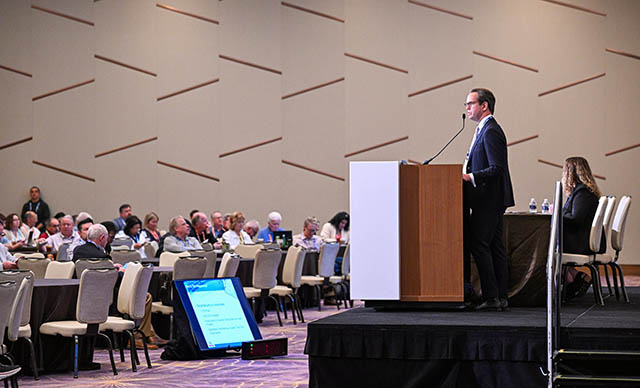
“The biggest mistake most people make is they spend a lot more time planning for their vacation than they do their Social Security,” Matthew Allen, co-founder of Social Security Advisors, said during a recent ENGAGE session. “If you spend some time planning Social Security, you’ll be in a situation where you can take a lot more vacations.”
Allen said there are more than 2,700 Social Security rules, resulting in married couples having more than 9,000 paths from which to choose.
Family dynamics are central to an abundance of Social Security rules, and for uninformed applicants, mistakes when applying for benefits can lead to some serious missed opportunities.
Survivor benefits can begin at age 60
While some wait until close to age 62 — the earliest age you typically can claim Social Security benefits — to map out a plan, that’s too late to start if you’ve already survived a spouse.
“There are a lot of opportunities for survivors,” Allen said. “It’s not pennies.”
Surviving spouses can claim Social Security beginning at age 60, and even if the living spouse and the deceased one happen to be eligible for the exact same monthly benefit, proper planning can pay some serious dividends.
Allen offered an example of a couple — one spouse alive, one spouse deceased — who would each have been eligible for a monthly benefit of $2,000 at the full retirement age of 67. The living spouse actually can begin at age 60 claiming 71.5% of their deceased partner’s $2,000 monthly benefit ($1,430 a month); then at age 70, they can switch to drawing their own monthly benefit, which would have matured to roughly $2,480 a month based on the standard annual benefit for delaying claiming of 8% growth.
Allen noted the importance of the spouse opting to claim their late spouse’s benefit at age 60 as opposed to their own benefit, because while their monthly benefits can increase until age 70 (to $2,480 in this case), survivor benefits stop growing when they reach age 67 ($2,000).
Allen estimated the benefit of such a strategy to be $221,000 over an average life expectancy.
Spouses can take advantage of rules related to survivors
Allen said he isn’t a fan of “rules of thumb,” given that he has advised thousands of clients and that no two situations have been the same. But he did offer one rule for married couples who want to have one spouse claim Social Security benefits early.
“If there is going to be someone filing early because they’re trying to create cash flow or whatever it is for planning, it should generally be the lower earner that taps in first,” he said. “That’s mainly because of the way survivor benefits work.”
If one spouse dies, Allen explained, then the surviving spouse becomes eligible to begin claiming the deceased spouse’s monthly benefit amount. So, if one spouse has a higher benefit based on their work record, then holding off on claiming that benefit until a later age allows it to build further, adding protection for a surviving spouse in the event of a death. If the spouse eligible for a lower benefit were to die first, the surviving spouse would draw from their personal benefit.
A family with a minor child can benefit in a couple of ways
“There’s all these different nuances,” Allen said. “There’s a lot more to Social Security planning than meets the eye.”
A prime example: If at least one parent in a married couple is actively claiming benefits (or if a parent eligible for benefits is deceased) and there’s a minor child in the home, both the child and the other parent may also receive monthly benefits.
If there’s a child in the home under the age of 18, that child can receive half the monthly benefit of the parent who is currently receiving benefits. And if the other parent is caring for the child in lieu of working, that parent could receive a monthly benefit of up to 50% as well until the child reaches the age of 16. In addition, both can be paid out at the same time and also may be paid out if the parents are divorced.
Some divorced spouses can claim on an ex-spouse’s record
When someone with a former spouse initially prepares to sign up for benefits, they may benefit from the work record of their former spouse.
“Divorced spouses are actually kind of an interesting group because they have some advantages, in a way, versus a married couple,” Allen said. “After two years of being divorced, they may qualify for what’s called ‘independent entitlement.’”
In short, if a couple had been married for at least 10 consecutive years, then two years or more after divorce, a person eligible for Social Security benefits could claim the higher-earning former spouse’s monthly benefit. The higher-earning spouse’s benefits wouldn’t be adversely affected, and they wouldn’t even know that such a claim had been made.
One major caveat: The maximum benefit is half of the higher earner’s monthly benefit and is reduced if the person claiming the benefit hasn’t yet reached the full retirement age of 67. So, for the rule to pay off, the higher earner’s monthly benefit must be at least twice that of the other person for the claim to be a consideration.
Editor’s note: If you didn’t attend ENGAGE, you still can access this session. Those who purchased an all-access pass to ENGAGE can view this and other archived sessions.
— To comment on this article or to suggest an idea for another article, contact Bryan Strickland at Bryan.Strickland@aicpa-cima.com.