New AICPA chair pitches a people-first profession
A big college baseball fan, Jan Lewis steps up to the plate with her eyes on championing the needs of all members.

When you have made a career in tax at a regional firm in the Deep South and you’re a huge college baseball fan, spring weekends are special.
“There’s nothing like coming off a busy tax season and going on a warm Saturday afternoon and watching college baseball,” said AICPA Chair Jan Lewis, CPA, CGMA, partner at BMSS Advisors & CPAs in the Jackson, Miss., metro area.
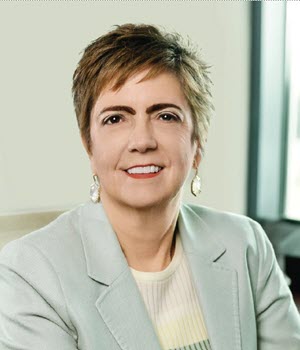
Lewis, who, in May, began a one-year term as the 2026–2027 chair of the AICPA board of directors and the chair of the Association of International Certified Professional Accountants, is a Jackson native who has worked at the same core firm for nearly 40 years, most of them as tax partner at Haddox Reid Eubank Betts PLLC. In 2023, the local accounting firm became part of a top 100 U.S. firm when it merged with Alabama-based BMSS Advisors & CPAs.
Before Lewis entered the profession, her family background made her a believer in human-centered customer service. Her time at Haddox Reid Eubank Betts and her two decades of involvement with the Mississippi Society of CPAs (MSCPA) made her a champion of small accounting firms. Since 2010, Lewis has also been involved with the AICPA, taking on extensive volunteer leadership roles and responsibilities. Off the job, Lewis is a huge fan of Mississippi State Bulldogs baseball, and she and her husband are pet parents to three “spoiled Dachshunds.” Their passion for MSU baseball is exceeded only by their love for their dogs, and they are big fans of animal rescue, having rescued five dachshunds over the years.
On the job, Lewis passionately believes that leadership begins with listening — to members, to clients, to the realities that shape the profession — and letting those insights guide her actions. By leading with listening and empathy, Lewis embraces a stewardship mindset: responsible and practical management that focuses on the future. She believes that a leader’s role is not one of ownership or control but of temporary trust and caretaking. By grounding decisions in member realities, she aims to leave the profession stronger, more inclusive, and better equipped to serve practitioners wherever they are.
“She is always thinking forward and looks out for our profession,” said Don Murphy, CPA, CGMA, the CEO of BMSS Advisors & CPAs. “She’s testified in front of Congress, and I’ve seen her on some of our AICPA Town Halls. … She does an awesome job representing our profession.”
While Lewis has spent her career in U.S. public accounting, she is excited to chair an international organization like the Association, whose membership bodies, the AICPA and CIMA, represent 574,000 members, candidates, and registrants in 150 countries and territories — many of them working in corporate accounting and finance.
“Whether you’re with a one-person firm or a billion-dollar firm with 4,000 people, or whether you’re a CFO or a controller at a company anywhere in the world, the Association is valuable to you,” Lewis said.
A RESPECT FOR SERVING OTHERS
Service is in Lewis’s DNA. Lewis saw her late father assist customers during his 30 years as an independent pharmacy owner in Jackson. She worked at the front counter, learned how to operate a small business, and met people every day. She also saw her father actively involved in the Mississippi Pharmacists Association — including a year as chair and 18 years on the board of directors. Through those experiences, serving people and a profession became very important to her. “I remember thinking that’s just what you do when you’re in a profession,” she said.
Lewis’s mother was a nurse who retired after the birth of her second child. Lewis, the youngest of three, said her mom “was always taking care of her family and friends.”
Being a pharmacist wasn’t the right career path for Lewis — she hated chemistry classes in high school — but she loved all the aspects of owning a business and coveted the years-long relationships her father had with his customers. Lewis’s older siblings graduated with accounting degrees, but Lewis wasn’t interested at first.
“I didn’t exactly appreciate all the different career paths available as an accounting graduate, so since I didn’t want to do what my brother and sister did, I didn’t consider accounting as a major at first,” Lewis said. “But I had to take accounting as a requirement for my business major, and within weeks of enrolling in my first accounting class, I knew it was for me.”
The class taught Lewis that accounting is the language of business, and she realized that accounting knowledge would be invaluable regardless of whether she became an entrepreneur, an attorney, or anything else in business. She changed her major to accounting and then found her career path when she took her first tax class the next year.
“I was hooked,” Lewis said. “And, in the end, I am a business owner and an entrepreneur as a partner in a CPA firm. And I get to do it all while enjoying the world of tax.”
PEOPLE-FOCUSED IN AN AI WORLD
Lewis sees a renewed importance in people skills, in part driven by the advent of artificial intelligence (AI). Accounting and finance professionals are trusted advisers for a reason, but the reliance on AI to complete data input and analysis is creating an opportunity for CPAs to hone their people skills and deliver more value to clients.
“We really need to grow those [people skills] as quickly in the profession as we grow any of our technology skills,” Lewis said. “If AI is going to prepare the tax returns or prepare the audit report, when you go into that meeting with the client, who is going to ask the questions?”
Okorie Ramsey, CPA, CGMA, saw those people skills in action when he first encountered Lewis about five years ago.
“[Jan] has the brilliant ability to turn complex tax topics into common sense for our members. I am not a tax guy, but I was listening to one of Jan’s tax updates at AICPA Council and I was completely enthralled,” said Ramsey, vice president, Sarbanes-Oxley at Kaiser Permanente in Oakland, Calif., and the 2023–2024 AICPA and Association chair. “Jan has got something special about the way she can bring tax concepts to life.”
Curiosity and asking open-ended questions are integral to building lasting relationships and deeply rooted trust. Lewis has also built lasting relationships in her personal life, as evidenced by her 33-year marriage to high school sweetheart John Lewis, who owns his own business, Lewis Holdings.
Lewis said her husband describes her as a CPA psychologist and that psychology and accountancy are similar in that they both focus on solving problems, developing relationships, and caring for people.
ENSURING EVERY FIRM AND MEMBER HAS A VOICE
Various pressures, including emerging technologies and shifting regulations, are reshaping what all firms need to succeed — especially small accounting practices. Small firms often need scalable support over one-size-fits-all solutions, and they need tools and processes that save time and expand access to talent. Lewis sees deepening their representation within the AICPA as essential to ensuring those realities are reflected in how the profession evolves.
“I think there’s pressure at times on a small firm that you’re not successful if you don’t get bigger, sell more, have more revenue, or merge with somebody,” Lewis said. “You don’t have to do everything. Pick who you’re going to be and that’s fine. You can be extraordinarily successful being in a small firm, being a sole practitioner, or being in a midsize firm.”

Lewis wants to end any misconception that the AICPA is only for large firms and reinforce how the AICPA supports the entire profession through resources like the AICPA Town Hall, the Center for Plain English Accounting, the Private Companies Practice Section, and advocacy efforts.
“If a small firm doesn’t think the AICPA is relevant to them, they’re wrong because we are. It’s communicating the value of the AICPA,” Lewis said. She cited the AICPA Town Hall Series, a twice monthly broadcast that examines pressing issues facing the profession.
“I was speaking at a Utah Society of CPAs meeting, and somebody came up to me afterwards and said the AICPA Town Halls were the greatest thing the AICPA has ever done,” she said. “I thought that was so telling because just that hour every other week feels like we’re touching firms of all sizes with different updates.”
Communicating the AICPA’s value to firms and finance departments of all sizes will be key, she said, and she’ll lean on her background in both large and small firms.
“[Jan] relates to the sole practitioner and small firms and the issues they have,” said Melanie Lauridsen, vice president—Tax Policy & Advocacy at the AICPA, who met Lewis when Lewis became the vice chair of the Tax Executive Committee (TEC). “She’s well rounded with the heart of a smaller firm practitioner. … She’s strategic, she’s hardworking, and ready to roll up her sleeves and jump in.”
Lewis links firm representation and AICPA member value to the organization’s advocacy work. She saw the advocacy efforts firsthand with her work on various AICPA tax committees, in addition to giving congressional testimony, signing comment letters, and engaging directly with policymakers. The efforts of the AICPA Advocacy team, Lewis said, represent the issues facing the profession, including modernizing licensure, protecting mobility, reporting requirements, and more.
“We have a seat at the table when things are happening in [Washington, DC], and that benefits you, and that advocacy alone is worth your membership,” Lewis said. Deepening representation for small firms “is about communicating and making sure that we let members know what we are doing and that we’re listening.”
One of the highlights of Lewis’s volunteer journey with the AICPA came when, as chair of the TEC, she testified at a U.S. Senate Finance Committee hearing to address IRS customer service challenges.
“I was able to explain the challenges that all of us were experiencing relating to IRS communications, notices, customer service, and filing issues,” said Lewis, who explained further that the TEC represents firms of all sizes, large and small.
When the passthrough entity tax (PTET) state and local tax (SALT) deduction limitation was introduced in the original versions of H.R. 1, P.L. 119-21, commonly referred to as the One Big Beautiful Bill Act, Lewis immediately understood the technical implications to partnerships. The majority of AICPA membership is made up of partnerships, said Lauridsen, who said Lewis “was one of the first members to work with us to start looking at how best to advocate against the PTET SALT deduction limitation.” The advocacy campaign was successful, as the deduction limitations were dropped from the final legislation.
“[Jan] is technical. She’s also very intuitive. She can see politics at play from working with tax,” Lauridsen said.
BUILDING A PROFESSION WORTH CHOOSING
When Lewis was president of the MSCPA in 2008–2009, she said she realized that she didn’t see a lot of early-career professionals attend conferences or annual meetings or take up leadership positions. That didn’t sit well with her.
“The MSCPA executive director and I got in my car, and we went all around the state,” she said. “We would take cookies and have meetings and invite any CPA under the age of 35 to come. I had my laptop, an Excel spreadsheet, and I was getting names and email addresses.”
From that initial tour, the MSCPA Young CPA Network was created. What started with 30 email addresses on a spreadsheet evolved into well-attended events with over 100 participants where professionals could network and inspire each other.
When professionals can visit students and recent graduates directly and discuss the flexible, successful, challenging, and dynamic career possibilities accounting offers, students have an easier time seeing themselves in the role.
“My passion is getting students to understand what an accounting degree can do for them,” Lewis said.
Face-to-face time is invaluable, Lewis said, but it only works if there are students ready to learn more about accounting — a key reason why Lewis is focused on continuing the AICPA’s efforts to broaden access to CPA licensure.
More than half of the states have adopted a new path to CPA licensure requiring a bachelor’s degree, two years of supervised work experience, and passage of the Uniform CPA Examination. Legislation to adopt a bachelor’s degree path to licensure is pending in many other states.
Last year, the AICPA and the National Association of State Boards of Accountancy amended the Uniform Accountancy Act (UAA) to add a pathway to CPA licensure in line with those added by the states. It is a third option alongside the two existing pathways — (1) a master’s degree with one year of work experience and the CPA Exam or (2) 150 semester hours, the CPA Exam, and one year of work experience.
Getting people into accounting is the first step, Lewis said. The next is “making sure they understand the opportunities in the profession.”
Lewis started her career at a Big Eight firm but left because it didn’t feel like a good fit. “The office I was in focused on audit, and I wanted to do tax,” she said. But it was a great learning experience, and it confirmed that public accounting was the path she wanted to stay on.
Taking from her own experience, Lewis doesn’t want an early-career professional to give up on the profession too soon if a role doesn’t feel like a good match. Accounting is so dynamic that one role doesn’t sum up the entire profession.
“There are a million different firms of different sizes and different things you can do. We need to make sure they understand that,” she said, adding that she believes CPAs should share with students in local communities how careers in public accounting and finance can provide a wide variety of opportunities.
“We all have our own story of career paths, and probably none are the same,” she said. “We can access students in our local communities, schools, and the colleges we attended, and speak out on social media and through our own state CPA societies to get that message out.”
She also wants to ensure nascent accountants are equipped for successful careers. Mentorship opportunities as an early intervention can help retain professionals and demonstrate the breadth of the profession. BMSS has established two programs — “Mentor & Motivate” and “NextGen Leadership Development” — designed to grow the next generation of leaders in the accounting profession. It is a mentorship philosophy that Lewis says reflects one of the firm’s core values: leaving a legacy for future generations.
LEADERSHIP THAT STARTS WITH LISTENING
Guiding Lewis this year is an aligned approach from outgoing chair Lexy Kessler. “What I loved about Lexy was that she said from the beginning that she wanted to listen,” Lewis said. “I took that as so refreshing as a true leader who wanted to listen to members.”
Listening will be Lewis’s key tool as she focuses on the power of relationships and client-centered service, increases representation for small firms, and bolsters the future of the profession through technology, initiatives, and growing talent pools.
“Jan is a thinker. … She’s a great listener,” Ramsey said. “Being able to hear what’s said but also what isn’t said and to create space for individuals to bring their thinking into the conversation is a real strength, and that’s needed with a global organization.”
Fast facts
Alma mater: Mississippi State University.
Dogs: Connie, Rocky, and Snoop.
Husband: John.
Favorite food: Shrimp cooked any way you want and in anything.
Favorite movie: The Sound of Music.
Favorite Broadway play: Wicked.
Favorite big city: Washington, DC.
About the author
Jamie J. Roessner is a senior content writer at the Association of International Certified Professional Accountants. To comment on this article or to suggest an idea for another article, contact Jeff Drew at Jeff.Drew@aicpa-cima.com.
LEARNING RESOURCES
Stay ahead on issues shaping small CPA firms.
WEBCAST
The Private Companies Practice Section (PCPS) is an add-on firm membership section within the AICPA that supports CPA firms by providing practical and customizable practice management resources.
SECTION
For more information or to make a purchase, go to aicpa-cima.com/cpe-learning or call 888-777-7077.