Midyear advocacy update: STEM, BOI, taxes and licensure
Sponsored by Thomson Reuters
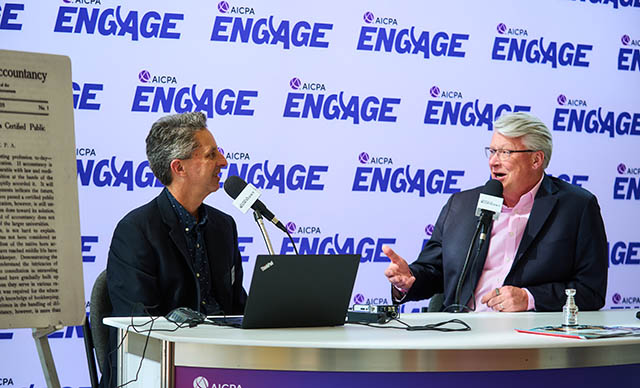
What advocacy issues should CPAs be watching with 2026 at its midpoint? The latest Journal of Accountancy podcast episode covers numerous topics with Mark Peterson, executive vice president–Advocacy for the Association of International Certified Professional Accountants, representing AICPA and CIMA.
Peterson details efforts to include accounting in STEM education initiatives, what the future might hold for beneficial ownership information reporting requirements, and the profession’s role in seeking guidance related to federal tax guidance.
Peterson, speaking from AICPA ENGAGE earlier this month, also explains the vital role of state societies’ advocacy efforts. He touches on CPA licensure, the Fiscal State of the Nation Act, tariffs, and other policy developments that affect practitioners and their clients.
Also, read Peterson’s midyear summary in column form.
What you’ll learn from this episode:
- Why the AICPA continues to push for accounting to be included in STEM education initiatives, and what progress advocates are making on Capitol Hill.
- What the future may hold for beneficial ownership information requirements after the pause in BOI reporting enforcement.
- The critical role that state CPA societies play in licensure modernization and advocacy efforts.
- Peterson’s perspective on how the AICPA is helping to get more clarity around implementation of major federal tax legislation.
- Why he says that implementation of the massive tax bill has been “lumpy.”
- Peterson’s reflection on the rise of Town Hall as a way to quickly get information and perspective to members.
- Ongoing and emerging policy issues — including tariffs, global mobility, and anti-money laundering efforts — that could affect the profession in the months ahead.
Play the episode below or read the edited transcript:
— To comment on this episode or to suggest an idea for another episode, contact Neil Amato at Neil.Amato@aicpa-cima.com.
Transcript:
Neil Amato: Welcome back to the Journal of Accountancy podcast. Recording at ENGAGE in Las Vegas, this is Neil Amato with the JofA. The topic of this episode is a midyear advocacy update with Mark Peterson. You’ll hear that conversation right after this brief sponsor message.
[Sponsor message]
Amato: As I said, our guest is Mark Peterson. He’s executive vice president–Advocacy with the AICPA. Mark, we’re glad to have you on the podcast. Thanks for joining me in person.
Mark Peterson: It’s great to be with you here, Neil.
Amato: This is going to be, as I said, a midyear advocacy recap. So we’re going to go back to January, but we know things are up to the second in your world. We’ll first start with STEM, legislation that would support accounting as STEM. STEM again is science, technology, engineering, math. Where does that stand?
Peterson: We’ve been at this a while, Neil. And it’s frustrating because, to be honest, most policymakers think that we’re included in the M, right? But we’re not. And it does create a real opportunity for us to showcase the profession because STEM is getting so much interest and focus in education. And so the legislation would actually include us in the STEM designation for K through 12 career awareness. And there are funds there available for that.
We’ve been working on this for a long time. There’s no real opposition from a policy perspective, nor is it partisan in any way. It’s just hard in the current environment to get small, good ideas done because very few things are passing.
So what we’ve done is each year, we’ve got it reintroduced, working with our sponsors, and we really are focused on a co-sponsor drive. And a co-sponsor drive means you get other members of Congress to sign on to it so that it indicates their support. And then what we can do is we could take that list to the leaders of the House and the leaders of the Senate and say, we either have 60 senators or we have 219 members of [the House]. And it gives us the ability to say, if you put it on the floor, there’s enough votes, obviously.
There are other ways to get things done. That’s how we’ve focused. It’s been reintroduced. Lots going on, working very closely with the state societies in order to get a lot of attention to this back home. And there is, again, a focus on STEM and the importance of the profession within STEM. And I’m a little embarrassed to say it, Neil, but we have been included in STEM in the UK and in other countries. So we’re a little behind here in the U.S.
Amato: It is a tough environment, as you say. So still working on it, still chipping away.
Peterson: Yep. At the federal level, things take a while.
Amato: Yep. So what about beneficial ownership information? Our readers know that acronym, BOI, beneficial ownership [information] reporting. It’s a tax-tangential topic that has had a lot of interest because members are getting questions from their clients about it. What’s the update on the legislative process related to that topic?
Peterson: So I’m going to go back just a little bit because it really comes out of anti-money laundering.
Amato: Which is something we’re all for.
Peterson: We’re all for it. But in the United States, the process, we have to think about it because it’s a little more litigious than some other countries. Cost of compliance is real. We all want to do our part as it relates to terrorism funding or any money laundering, but we just need to be able to make sure that we can meet whatever expectations are created through policy.
And so BOI as we know it, came up because of a report that indicated some deficiencies in the United States infrastructure around money laundering, which led to what was called the Corporate Transparency Act. Of that, a provision was beneficial ownership information requirements. The reality was it created a huge responsibility for small businesses. If you think about trusts, LLCs, any kind of complicated structure, even at a small business, and there’s a responsibility to push this information through. It was coupled with significant fines.
And so there was ultimately pushback by the Trump administration, and that has been basically put in the parking lot for now. Having said that, we are now going through, again, the analysis of our anti-money laundering infrastructure. I would not be surprised if coming out of that there would be a recommendation around doing something more around beneficial ownership information. Having said that, I do think that Congress heard enough from small businesses and from the profession that they’re not likely to push forward with a statutory requirement. We’re going to stay vigilant, though.
Amato: For those who don’t know, Fiscal State of the Nation Act: What is it and how does it apply to our members?
Peterson: So there’s another piece of legislation, good idea, thought leadership that’s been out there for a while, really plays on the credibility of the profession. But we’ve been dealing with debt and deficit at the federal level for a long time. The reality is during COVID, the real focus was on pushing money out in order to get the economy rolling again. However, there is just the reality of a $38 trillion deficit. And so that’s not just in the U.S. Other countries are running deficits as well. But we’ve got to figure out how we address that.
One of the things that we’ve pushed as a policy is — and you’re not going to believe that this doesn’t happen — but have the comptroller general come in. Picture a State of the Union, joint session of Congress. So you’ve got the House and the Senate together on the House floor. They would get a presentation from the comptroller general of the financial statement of the U.S. government.
We’re not going to say you should set defense spending here. We’re not going to talk about where tax brackets should be set. We’re not going to talk about entitlement spending, but policymaker, whatever you do has an impact on this financial statement. The idea is to just create more awareness. And we do have credibility because obviously we live in the financial statements.
Amato: Exactly. Now, we’re talking mainly about advocacy efforts on the federal level, advocacy efforts you lead [in] our organization, but what about the role of state societies? How does what they do affect state and federal legislation?
Peterson: It’s vital. There are a couple things. So, you know, we’re a national, actually global profession, but we are regulated as CPAs at the state level. The AICPA has an incredible partnership with the state societies. And the truth of the matter is that you can’t do that work from Washington. You have to be on the ground. You have to be in the state capitals. You have to have the right ZIP code and the right accent in order to get anything done.
And so working with them, whether it be at the state level, addressing issues and questions that come up around the license, opportunities or challenges around assurance, which is something that’s being discussed around crypto and AI, at the state level, as well as other regulatory issues. But then also working with the states to make sure that we can get their state voice heard in Washington.
So going to the Alabama delegation or the California delegation, asking them to talk to their members of Congress about co-sponsoring STEM. So it’s a bookend. They hear from us in Washington, and then they hear about it when they go back home. And that’s really how we can be effective. And so the partnership is vital. We’ve seen a lot of success with the states with moving forward with the new pathway to licensure with bachelor’s plus two. We’re north of just north of 40 states, you know, that’s just within two years, two legislative sessions. Pretty incredible.
Amato: I’m going to take a quick detour if you’ll allow it. You mentioned the word “accent.”
Peterson: Yeah.
Amato: It hit me when I sat in on your talk with Lindsay Stevenson earlier today. Two Dakotans, right?
Peterson: Well, so I grew up in Minnesota. I’m from Minnesota, but I went to college in North Dakota, and my whole family is from North Dakota, and I have a great affection for the state of North Dakota, yes.
Amato: Kind of that really smoothed-out anchor accent. It plays well.
Peterson: Apparently it does.
Amato: Tom Brokaw, you know.
Peterson: South Dakota.
Amato: South Dakota, right?
Peterson: He was from South Dakota. Yeah, absolutely.
Amato: Anyway, Treasury and IRS continue to put out guidance on HR 1. It’s a hot topic. What’s the AICPA’s role in continuing to comment on the guidance that’s coming out or what you’re seeking guidance on?
Peterson: So there’s a thousand-page bill that got passed last year. Went through the reconciliation process, which is just a procedure so that they, you know, they did it with a simple majority. That’s how they could get it done with a partisan vote. Thousand pages. Think of it this way: The legislative phase where it goes through Congress and gets to the president is running the marathon. But once you cross the line, you’ve got to run back to the start for the implementation phase.
And so that’s where they are right now because statutory language is very vague. The guidance has to come out. Interpretations have to come out. We as stakeholders in those regulations, we will respond to many of them. And so we are starting to get more and more clarity. There’s more to go.
It’s really an important function and role that we have working with the IRS and Treasury because they need to hear from us about what are the issues with implementation that on our end we’re feeling. And in the U.S. system, voluntary, and we have a significant role in helping collect revenue for the federal government in advising our clients. And the ability for us to get clarity around some of these administrative issues and how it should be implemented is very important, obviously, for the client, but also for the agencies. Treasury needs to know how it’s going, and they need to hear from us during that process.
Amato: How is it going?
Peterson: It’s lumpy. There are still a lot of questions, but we are slowly ticking off the things that we gave them a list of areas where we thought there needed to be more guidance. And we’re working through that list. It’s getting better and better, but there are still some questions out there.
Amato: Let’s talk a little bit about Town Hall. It’s twice monthly. It’s a live broadcast. It pretty much draws audiences in the five figures. You’ve been a key part of it. What’s it been like to be part of the growth of Town Hall?
Peterson: It’s pretty fascinating. It came out during COVID when we were trying to figure out how we could communicate what we knew at a very challenging period of time. The truth is, there were a ton of questions that not even the White House or Congress or Treasury could answer. But what we did is take what we did know, what we did know, not official, but what we did know and share the best available information, which was kind of new, right?
That was kind of new for the AICPA, where we many times put things through a committee to make sure that this is like an official position. This was more generally, we think, where it’s headed. It was welcomed at a time when everybody kind of needed, directionally, what do you think? So we were sharing the available information that we had, and it became extremely popular.
And I think that what’s been great from an advocacy perspective is, as you know, Neil, the stuff I do moves so quickly. By the time we do a newsletter, it’s already dated. So it gives us the ability every two weeks to talk about what we’re seeing and what’s going on. And where things are headed from a policy perspective is important, but adding how politics is driving the policy is very important.
A lot of people are frustrated with politics — completely understand that. We work with both sides of the aisle to get the best outcome that we can. We always have. But it does drive policy. And so understanding the motivation, understanding how the process works, and adding that to our ability to contribute to policy, and describing that on a Town Hall has been incredibly popular and just a great opportunity for advocacy.
Amato: Obviously, so much going on in your world. We’ve touched on a few of those topics. What else would you like to hit on in this conversation?
Peterson: You know, I’m speaking [June 11] here at ENGAGE, and we’re going to talk about tariff refunds and kind of the environment around tariffs. Lack of clarity there. Some more court cases are coming out. Refunds may be halted. We don’t know. There’s other authority that can be utilized by the president to impose more tariffs. So there’s some lack of clarity there that we’re keeping a close eye on.
Some real changes going on in global mobility, moving high-skilled talent around the world, not just the United States, other countries as well. And so there’s a focus on at least monitoring that on behalf of the profession, as well as lots of other issues. You know, I mentioned the anti-money laundering effort. We just had our interviews with the Financial Action Task Force, which is this international organization that does these mutual assessments. So we’ll see how that plays out this fall.
We’ve talked about STEM and Fiscal State of the Nation. Lots of issues that are going to be going on. As we head into what could end up being — you know, they’ve got to get the government funded again here at the end of September. And believe it or not, there could be some challenges in keeping the government open, which is always tough for us going into another filing season and how it impacts the IRS and Treasury.
Amato: And September sounds like a long way away, but there is a long summer recess, right?
Peterson: There is. They go home for the August work period. And by the way, in an election year, they want to get them out of here as quickly as they can, both sides of the aisle, to get home to campaign. And so, you know, nobody wants a shutdown, but you can also look at how tight it’s been with some of these votes and the fact that it took so long on this last funding bill to pass. There could be some challenges there.
Amato: A lot to monitor, a lot to think about, and we thank you for sharing your insight on it, Mark.
Peterson: Sure. Happy to be here, Neil.