What small firm CPAs need to know
The inaugural Small Firm Q&A explores tactics to manage audit services and increased compliance requirements, practices that make peer review and tax practice more manageable, and steps to consider before solo practitioners’ transition into retirement.
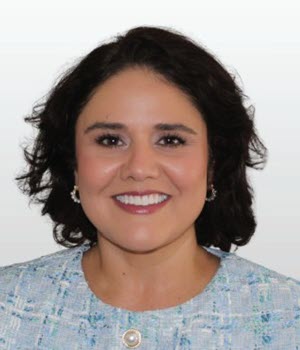
Editor’s note: Small firms frequently turn to Stephanie Otero, CPA, the AICPA’s vice president–Small Firm Advocate, with questions. In this new monthly column, she will address common challenges the smallest firms face and provide actionable advice in a question-and-answer format.
The inaugural Small Firm Q&A explores tactics to manage audit services and increased compliance requirements, practices that make peer review and tax practice more manageable, and steps to consider before solo practitioners’ transition into retirement.
Q. My firm has been offering A&A to nonpublic entities and not-for-profits, but with evolving quality management standards, peer review expectations, and potential changes to attestation requirements, it’s becoming more challenging to sustain this line of service. What tactics can help small firms provide audits despite these challenges? There are small firms that do specialize in audits, so what are the secrets to their success?
A. This is a concern I hear frequently from small firms, and it’s driven by more than just increased risk and complexity. New quality management requirements that add tasks such as documentation, monitoring, and remediation can be a challenge, particularly in firms that already have limited capacity. For many, it can feel like the effort required to manage compliance with AICPA professional standards, particularly quality management standards and peer review requirements, now rivals the time spent performing the audit itself.
Small firms that continue to succeed in A&A typically do so because they figure out how to financially justify the required time, expertise, and infrastructure. Best practices at these firms include:
- Choosing a clear niche where the firm has industry expertise and focusing on performing audits in that niche.
- Performing audit work regularly to introduce efficiency and profitability into the required effort. Occasional audit work tends to make every engagement feel like a restart.
- Choosing the right mix of clients and engagements to allow for repeatable processes, be it by industry, entity type, or complexity. Repeatable processes make compliance and quality management more manageable over time.
- Continually enhancing the use of technology and artificial intelligence (AI). (“See, Real–Life Ways Small Firms Are Using AI,” JofA, Aug. 1, 2026). When aligned with well–designed processes, AI tools such as the OnPoint A&A Suite, CPA.com’s generative AI toolkit, and the AICPA’s Josi, can improve consistency, support documentation, and reduce manual effort. As a result, firms can spend more time on complex areas requiring professional judgment instead of on administrative tasks.
- While technology doesn’t eliminate risk, it can meaningfully improve efficiency for firms that standardize how the audit is delivered.
- Sharing the load. It’s not necessary to do everything alone. Working with other small firms to share audit resources, using a consultant for complex areas, or partnering on engagements allows firms to achieve scale without carrying the full burden.
Firms that remain in A&A and are successful tend to have systems and processes designed to be sustainable, focused, and economically viable. But if you have collected a few audit engagements over the years without really meaning to build a practice area, stepping away from A&A may be the right strategic decision.
Q. Are there any steps that can make peer review more efficient for my small firm? We hold to high standards, but the process itself is really difficult. It’s making me wonder if staying in A&A work is worth it.
A. Peer review is another stress point that I hear about frequently from small firms in A&A, and it’s not because firms don’t care about quality. It’s because processes have become more focused on multiple areas, including risk assessment. As firms adjust to updated processes, it can seem overwhelming at first, particularly for firms with limited capacity and few layers of review.
The following practices can make peer review more manageable (see also “A&A Focus Recap: Improving the Peer Review Experience,” JofA, Dec. 3, 2024), especially when they’re undertaken proactively rather than right before their peer review year:
- Build consistency into documentation and workflows as part of your day–to–day quality management processes. Firms that standardize templates, checklists, and engagement files throughout the year are better positioned for peer review, with fewer surprises, less rework, and more efficient reviews.
- Make thoughtful use of technology and audit–specific AI tools. Choosing options that support document organization, engagement management, analytics, and research can improve consistency and reduce manual effort. Audit–specific, AI–enabled technologies can also help firms identify gaps, cross reference requirements, and flag inconsistencies earlier — allowing reviewers and partners to focus their time on judgment and supervision rather than administrative cleanup. Technology won’t eliminate the need to have a peer review, but it can make the process much more efficient.
- Use temporary or targeted support. Some firms engage experienced independent contractors or consultants, often retired practitioners or those with strong A&A backgrounds, to support engagement work and assist with remediation efforts. When used appropriately, this targeted support can help firms maintain quality while easing capacity pressures during peak periods.
- Consider capacity and scale. In practice, firms that perform audit engagements more regularly tend to develop more standardized, repeatable processes, which can help them manage peer review requirements more efficiently than firms that perform audits infrequently.
As noted in the last question, pivoting away from A&A can be a thoughtful, strategic choice. But for firms committed to assurance work, combining consistency, smart use of technology, and outside support can significantly improve the experience without sacrificing quality.
Q. As a sole practitioner, I am overwhelmed with the constant volume of new and more difficult tax laws. I like running my own ship, but I often find myself struggling to keep up with new requirements. What can I do to provide quality work without being overwhelmed?
A. Tax complexity ranked as the top concern of small firms in the 2026 PCPS Top Issues Survey. It’s of particular concern to sole practitioners, who don’t have teams to perform research, compliance updates, and administrative work. But you don’t have to operate in constant catch-up mode if you make some intentional choices. Here’s how:
- Narrow your scope. Be clear about the types of clients and services you will — and won’t — take. Trying to be everything to everyone in today’s tax environment is one of the fastest paths to burnout.
- Be deliberate about process and consistency. Standardizing workflows, checklists, organizers, and engagement letters can significantly reduce mental load and rework. Minimize the number of decisions you have to make repeatedly so you can focus your energy where professional judgment truly matters.
- Align technology with your workflow. Tools that assist with research, documentation, and data organization can improve efficiency and consistency, freeing up time for analysis.
- Consider offshoring or outsourcing. These solutions may not be right for every firm, but they can help small firm practitioners handle capacity. When implemented carefully and aligned with strong processes and oversight, outsourcing routine or administrative work can create breathing room during peak periods and allow practitioners to focus on higher–value tasks and client relationships.
Running your own practice should bring autonomy and professional satisfaction. The key is to set clearer boundaries, enhance efficiency, and find workable ways to enhance capacity.
Q. I am a sole proprietor with a tax practice focused on returns for local small businesses and individuals. I have one admin, a full-time enrolled agent, and I bring in help during busy season. I want to retire in the next five years. What are some steps I can take now to smooth my transition into retirement? In particular, what changes should I make that will bring me the best buyout and enable my people to stay on with a new owner, if possible?
A. Retirement planning for a sole proprietor is as much about practice design as it is about timing. If your goal is to maximize value, create a smooth transition, and give your team the opportunity to stay with the firm, the work really starts several years before you’re ready to step away.
These proactive tactics can help position you for a great transition:
- Reduce owner dependency. Buyers aren’t just buying a book of clients, they’re seeking a business that can operate successfully once you’re gone. That means gradually shifting client relationships, workflow oversight, and day–to–day decision–making away from yourself and over to your existing team where possible. Investing now in future leadership — whether that’s letting your EA take on more responsibility or having your admin step into a more operational role — makes the practice more attractive and resilient.
- Implement standardization and documentation. Practices that have clear processes, consistent pricing, defined service offerings, and documented workflows are easier to transition and typically command stronger outcomes in a sale or merger. Buyers want predictability. Standardizing how work gets done also makes it easier for your staff to adapt under new ownership.
- Clean up your client base. Firms that see the best outcomes are proactive about narrowing services, addressing underpriced work, and letting go of clients that don’t fit their long–term vision. These steps can strengthen profitability and make the practice easier to transition, benefiting you and whoever comes next.
Also, ask yourself this question: Who’s the best future owner for your firm? For many sole practitioners, partnering with another small firm well before retirement — through a gradual merger, joint work, or shared clients — can be an effective path. These relationships allow both firms to test cultural fit, align service models, and transition clients and staff more smoothly over time, rather than all at once.
Another option is developing internal successors or hybrid arrangements, where your team grows into leadership roles while being supported by an external firm or partner. Even if your current team isn’t ready to acquire the practice on their own, positioning them as leaders who can integrate successfully with a new firm increases retention and continuity.
Once again, it’s important to be intentional. Retirement shouldn’t be an abrupt exit. With deliberate planning, clearer roles, and thoughtful partnerships, you can create a transition that supports your team, serves your clients well, and reflects the value of the practice you’ve built.
About the author
Stephanie Otero, CPA, is AICPA vice president–Small Firm Advocate. She can be reached at SmallFirms@aicpa-cima.com. To comment on this article or to suggest an idea for another article, contact Jeff Drew at Jeff.Drew@aicpa-cima.com.
LEARNING RESOURCES
Join CPA.com in San Diego and online from Dec. 6—9 to discover emerging technologies, unlock actionable strategies, and collaborate with peers who are designing a new era of accounting.
CONFERENCE
Technology, firm practice management, and advanced auditing and accounting will be on the agenda at the biggest event in the accounting profession.
June 7–10, at the ARIA in Las Vegas
CONFERENCE
For more information or to make a purchase, go to aicpa-cima.com/cpe-learning or call 888-777-7077.
MEMBER RESOURCES
Engage365 communities
AICPA Private Companies Practice Section (PCPS) community
PCPS members are invited to join the PCPS Engage365 community. Whether you’re navigating firm management, exploring new technologies, or supporting your team’s development, this is your place to connect and grow together.
Tax professionals can join two communities tailored to their practice area — Corporate and International Tax and Individual and Small Business Tax — making it easy to connect with peers and exchange perspectives and practical guidance
Article
“AICPA Small Firm Generative Artificial Intelligence (AI) Policy Template,” Small Firm Management, April 29, 2026
Podcast episode
“Burnout Prevention in Action,” Firm Practice Management, Jan. 25, 2026
Toolkits
PCPS Strategic Planning Toolkit
PCPS Right-Sizing Your Client Base Toolkit
Website