Employer tax credits for small businesses are provided under the Families First Coronavirus Response Act.

Tax
Final regs. clarify when interest in corporation is stock vs. debt
The IRS has issued final regulations addressing when certain related-party interests in corporations should be treated as stock vs. debt.
Proposed rules govern deductions and reporting for restitution
The IRS issued regulations explaining the allowance of deductions for certain fines and penalties under Sec. 162(f) as amended by the law known as the Tax Cuts and Jobs Act.
IRS allows midyear changes to health coverage, dependent care elections
In response to the coronavirus pandemic, the IRS is allowing employers to permit their employees to change their health coverage elections or dependent care elections during the year and is extending the carryover period for health flexible spending arrangement (FSA) expenses.
Taxpayers must act soon for direct deposit of stimulus payments
The IRS announced that taxpayers for whom the Service does not have direct deposit information should go to its “Get My Payment” website and enter that information by noon on Wednesday, May 13, so they can receive their stimulus payments electronically.
Trusts and estates are permitted certain deductions
The IRS issued proposed regulations to clarify that certain deductions are allowed to an estate or nongrantor trust because they are not miscellaneous itemized deductions.
AICPA proposes broad range of tax relief to aid economic recovery
The AICPA has made a broad range of legislative recommendations to encourage economic recovery in the wake of the COVID-19 pandemic.
AICPA supports bill that would make PPP-funded expenses deductible
A bill introduced in the Senate would clarify that ordinary expenses funded by Paycheck Protection Program loans are deductible by taxpayers. If enacted, this would overrule a recent IRS notice saying the expenses are not deductible.
State and local taxes during the pandemic
Eileen Sherr, CPA, CGMA, describes her work with state CPA societies as they advocate with state tax authorities for coronavirus-related taxpayer relief at the state and local level, and resources for keeping track of each jurisdiction’s response.
AICPA challenging nondeductibility of PPP-related expenses
The IRS issued guidance clarifying that a deduction is disallowed for expenses for payroll costs, mortgage interest, rent, utilities, and other interest on debt obligations to the extent they are being reimbursed by loans forgiven under the Paycheck Protection Program.
PLR and other requests for IRS guidance can now be sent electronically
The IRS is temporarily allowing taxpayers to submit requests for private letter rulings, closing agreements, determination letters and information letters electronically instead of by mail.
CARES Act QIP change requires action
Taxpayers with qualified property must act to take advantage of changes to the treatment of qualified improvement property, which is now eligible for bonus depreciation. Here are some considerations for taxpayers and their advisers.
Quick relief with the CARES Act
Chris Hesse, CPA, the AICPA Tax Executive Committee chair, analyzes how the CARES Act’s provisions allowing carryback of net operating losses for 2018 through 2020 interact with other new provisions.
Line items
Reconsideration of estate’s penalty abatement yields same result … In-game currency not taxable, IRS clarifies … IRS to step up high-income taxpayer visits
Sec. 6662(a) penalties require written supervisor approval
The Tax Court rules on when the burden of production regarding written supervisory approval moves to the taxpayer.
Failure to file FBAR is not due to reasonable cause
A taxpayer is subject to civil penalties for nonwillful failure, a court holds.
COVID-19 pandemic prompts many tax changes
Here are legislative and IRS responses to the coronavirus outbreak.
Supreme Court overturns consolidated group tax refund allocation rule
The Court holds the Bob Richards rule exceeds federal courts’ common-lawmaking authority.
Prop. regs. would govern silo rules for exempt organizations
The IRS issued proposed regulations on how to identify separate trades or businesses to determine a tax-exempt organization’s unrelated business taxable income under new rules that require different trades or businesses to be reported separately or siloed.
Relief for tax residency impacts of COVID-19 travel disruptions
Individuals and businesses can avoid having their prolonged stay in a country affect their tax residence if their cross-border travel was disrupted by the COVID-19 pandemic, under limited relief the IRS announced in two revenue procedures and FAQs.
Features
FROM THIS MONTH'S ISSUE
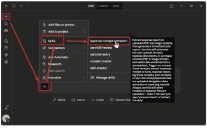
Build reusable Skills in Anthropic’s Claude AI
Instead of rewriting prompts each time, CPAs can turn routine tasks into reusable AI Skills. This Technology Q&A walks through how to build Claude Skills that process files, ask setup questions, and export clean Excel outputs.