ore and more, miracles in research and technology bring hope (and, perhaps, a cure) to those afflicted with chronic illness. Often, the costs of fighting a serious disease can be as—if not more—debilitating than the malady itself. Fortunately, a new IRS ruling provides limited relief for a taxpayer who
Advertisement
TOPICS
Tax
Litigation Costs for Unreasonable Penalty Recovered
In Mitchell, (TC Memo 2000-145), the Tax Court awarded a taxpayer litigation costs attributable to an accuracy-related penalty after finding it was not reasonable for the IRS to impose such a penalty. In the original case ( Mitchell, TC Memo 1999-283), the issue was the rule in IRC section 162(a).
IRS Division for Large and Midsize Businesses Begins Operations
Since its overhaul was mandated by Congress in the IRS Restructuring and Reform Act of 1998, the IRS has made considerable progress putting the various parts of its reorganization plan into place. A major component of the IRS restructuring was its split into four major operating divisions, replacing the regional
Line Items
Alimony Deductible When “Almost-Exes” Live Together Two taxpayers married in 1972. In 1994, the husband filed for a divorce and the couple signed a temporary agreement under IRC section 71(b)(1)(A), which provided that the husband would pay the wife $2,000 a month in alimony but both parties would continue to
Top Errors on Innocent Spouse Relief Form
Source: IRS’s electronic newsletter Digital Dispatch, www.irs.ustreas.gov .
Contingent Attorney’s Fees Taxed As Income.
In 1991 Eldon Kenseth was terminated by his employer after 21 years of service. He retained an attorney, under a contingent fee arrangement, and sued his employer under the 1967 Federal Age Discrimination in Employment Act. In 1993, he agreed to settle the case for $229,501. A portion of the
Taxation of Contingent Fee Awards
In many tort cases, as well as in class action lawsuits, the attorneys receive a contingent fee equal to a fixed percentage of the award or recovery. Whether the taxpayer must include the full award in his or her income or only the part remaining after paying the contingent legal
International
IFAC Issues Reporting Standards for World Governments In May the International Federation of Accountants released the world’s first authoritative set of independent financial reporting standards for public-sector entities. Known as International Public Sector Accounting Standards (IPSASs), the IFAC guidance is derived from the International Accounting Standards Committee’s International Accounting Standards
Corporate Tax Shelters
orporate tax shelters have been the subject of intense debate over the past few years. They are a growing problem, costing the federal government billions of dollars annually. In an effort to curb these abuses, after a series of hearings (in which the AICPA, among other organizations, participated), the
Line Items
An English department chairman in a San Francisco public high school audited two university extension program courses overseas. The courses—one in Thailand and one in Greece— were taught by university professors and met on a regular basis. For each the taxpayer had to follow a structured syllabus, complete extensive reading
Size Matters to the IRS
The size of the automobile you buy for business use matters to the IRS. In fact, there is a tax benefit to purchasing a heavier, less fuel-efficient automobile. The annual depreciation deduction for most automobiles used in a trade and business is subject to the limited luxury automobile rules (LLAR),
Aggregating Your Rental Activity? Be Sure to Tell the IRS
As a general rule, passive activity losses can offset only passive income and cannot be used to reduce active or portfolio income. Also, tax credits derived from passive activity can offset only taxes incurred from passive income. Any loss or credit that is disallowed becomes suspended and is treated as
E-Filing on the Rise
Source: Electronic Tax Administration, Strategy for Growth, www.irs.ustreas.gov.
Compensating Employees With Nonemployer Stock Options
lans that provide nonqualified stock options for executives and certain other employees—those giving an individual the right to buy a set number shares of an employer’s stock (generally after a vesting period) at a specified price for a period of time—are a popular form of compensation in the corporate world.
IRS Unveils Initiative to Solve Processing Problems
The IRS announced that, beginning with the 2001 filing season, taxpayers will be able to check off a box on form 1040 and designate a paid individual tax return preparer to resolve processing-related issues. IR 2000–23 says the designee will be able to speak directly to IRS customer service representatives
Got Tips? Better Report Them
ou’ve just eaten an exquisite meal in a fine restaurant. Feeling satiated and generous, you decide to leave the superb wait staff a rather large gratuity. Hours after you’ve left the restaurant, that tip is pooled with others and divided among the staff. Who pays taxes on tips? Employers, employees
Shareholder Allowed Deduction for S Corp. Debt Loss
Generally, shareholders of Subchapter S corporations are able to use their distributive share of losses to offset income from other sources to the extent of their basis in stock and debt in the company under IRC section 1366(d)(1). With respect to debt loss, the IRS and the courts historically have
Stock Redemption and Divorce Revisited
When negotiating a divorce settlement, the issue of how to separate ownership of a couple’s closely held business can cause significant problems. One option is for the corporation to redeem the stock owned by either of the spouses. The taxation of such a transaction, however, has been the subject of
IRS Adds New Third-Party Letters
In the past, the IRS has been accused of using third-party letters to pressure taxpayers into disclosing certain information or into settling disputes. Afraid that friends, family or business associates would be contacted by the IRS, taxpayers often caved in. The IRS Restructuring and Reform Act of 1998 requires that
When to Deduct Annual Expenditures
Many corporate taxpayers incur expenditures that provide a benefit in both the current and the following tax year. For accounting purposes, a company would simply allocate the expenses between the two periods. The tax treatment, however, is less certain. IRC section 162 permits taxpayers to deduct all ordinary and necessary
Features




FROM THIS MONTH'S ISSUE
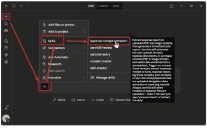
Build reusable Skills in Anthropic’s Claude AI
Instead of rewriting prompts each time, CPAs can turn routine tasks into reusable AI Skills. This Technology Q&A walks through how to build Claude Skills that process files, ask setup questions, and export clean Excel outputs.
From The Tax Adviser
April 30, 2026
Current developments in taxation of individuals: Part 2
April 30, 2026