Three months ago, the SEC staff had its say on IFRS. Now the IFRS Foundation is providing its own analysis. The IFRS Foundation on Tuesday released a detailed, 84-page response to the SEC’s exhaustive, 127-page report on IFRS, which was released in July. The SEC’s report outlined concerns it had
Advertisement
TOPICS
Accounting & reporting
U.S. leadership position among accounting bodies at stake if progress toward IFRS, convergence stalls, Melancon warns
The U.S. must keep pushing for convergence of U.S. GAAP and international standards, AICPA President and CEO Barry Melancon urged in a speech Monday. Melancon, addressing the AICPA governing Council, raised concerns that support is waning for convergence of international standards and U.S. GAAP, with talk of comparability rather than
Private Company Council chair favors holistic approach over differential standards for public, private companies
The chairman of the new Private Company Council envisions trying to change FASB standards for all users before attempting to create exceptions or modifications to standards for private companies. The chairman, Billy Atkinson, said during an AICPA fall Council presentation Monday that he would favor differential standards for private companies
New Private Company Council’s first meeting set for Dec. 6
The new Private Company Council (PCC) will hold its first public meeting Dec. 6 at the offices of the Financial Accounting Foundation (FAF) in Norwalk, Conn. Formed by FAF to work with FASB to develop modifications and exceptions to U.S. GAAP for private companies, the PCC will open its agenda
Diermeier replaces Brennan as chair of FAF board of trustees
Former CFA Institute President and CEO Jeffrey Diermeier has been elected chairman of the board of trustees of the Financial Accounting Foundation (FAF), succeeding John Brennan. Brennan, who is chairman emeritus of the investment management company The Vanguard Group, had led FAF’s board since February 2009. While stepping down from
FASB moves forward with new model for financial instrument impairment
FASB’s new model for impairment of financial instruments is clearing hurdles as the board pursues a different path than its international counterpart on expected credit loss. The revised credit impairment model FASB is developing will be re-exposed separately from tentative proposals on the classification and measurement of financial instruments, according
Investors aware of issues before goodwill impairment announcements, study shows
By the time a company announces that goodwill is impaired, investors have been aware for months that the company is facing problems, a new study indicates. One objective of the fourth annual Financial Executives International (FEI) Goodwill Impairment Study was to compare the stock price performance of companies that recorded goodwill
ASB recommends scoping nonissuers out of “auditor commentary” requirements
An AICPA committee is weighing in on a recent International Auditing and Assurance Standards Board (IAASB) proposal that would require expanded commentary in auditors’ reports. Nonissuers, such as private companies and nonprofits, should be scoped out of requirements for “auditor commentary” when the IAASB’s proposed standard is developed, according to a
FASB, IASB keep time value of money in revenue recognition standard
Adjustments for the time value of money, which have generated some opposition from stakeholders, are likely to remain a part of the converged revenue recognition standard that is being jointly developed by FASB and the International Accounting Standards Board (IASB). The boards last week tentatively affirmed a proposal in the
Financial reporting
FASB released its initial staff recommendations on whether and when it will be appropriate to adjust financial reporting requirements for private companies. The recommendations are contained in a paper, Private Company Decision-Making Framework: A Framework for Evaluating Financial Accounting and Reporting Guidance for Private Companies. FASB invited stakeholders to
IASB to issue “targeted re-exposure” of insurance proposals
The International Accounting Standards Board (IASB) decided this week to re-expose its proposals for insurance contracts accounting. Although the project, which has been undertaken jointly with FASB, has been in progress since 2007, the IASB decided that re-exposure for public comment is appropriate because substantial changes—whose effects need to be
COSO proposals give real-world internal control examples
News reports show the frightening weather satellite images of a hurricane that’s causing concern for leaders of an automobile manufacturing plant. The possible effects on the supply chain as the storm approaches one of the company’s suppliers seem obvious. The problems this could cause for internal control over the company’s
FIN 48 among first priorities for new Private Company Council chair
The standard known as FIN 48 will be among the first issues the newly formed Private Company Council (PCC) discusses, Billy Atkinson said Wednesday after being named the council’s chairman. Atkinson said FASB Interpretation No. 48, Accounting for Uncertainty in Income Taxes, has been a concern for private company representatives.
Private Company Council selections expected this month
A new system for creating exceptions to U.S. GAAP for private companies will move forward with the selection this month of members of the Private Company Council (PCC). During an informational webcast conducted Friday, FASB said the agenda for the Financial Accounting Foundation (FAF) includes a September date for PCC
FASB sees flexibility, relevance as cures to disclosure overload
As described by FASB member Marc Siegel during a webcast Wednesday, disclosure requirements are becoming increasingly burdensome for financial statement preparers. One objective of a current FASB project is reducing the volume of those disclosures by enabling flexible requirements geared toward relevance. Siegel described the disclosure overload problem in detail
Still in flux: Future of IFRS in U.S. remains unclear after SEC report
The future of international accounting standards for U.S. public companies remains uncertain after the release in July of a long-anticipated SEC analysis of IFRS. In a 127-page report released on the final day of Chief Accountant James Kroeker’s tenure, the SEC staff said the global financial reporting community considers the
Financial reporting / regulation
The release of a FASB discussion paper for its disclosure framework project represents a significant step in the effort to improve the effectiveness of disclosures in financial statements. The 81-page document, which FASB calls an invitation to comment, came the same day the European Financial Reporting Advisory Group (EFRAG) released
Proposed amendments clear way for audits of SME Framework financial statements
Proposed amendments to auditing standards issued today by the AICPA Auditing Standards Board (ASB) include changes that would clear the way for audits of financial statements prepared in accordance with the special-purpose financial reporting framework for small and medium-size entities (FRF-SME) the AICPA is developing. The proposal, Omnibus Statement on
FASB takes new path in contentious financial instruments project
FASB is crafting a new expected credit loss impairment model in hopes of moving forward again in the joint accounting for financial instruments project the board is pursuing with the International Accounting Standards Board (IASB). In July, IASB Chairman Hans Hoogervorst reacted with consternation when informed that FASB intended to
FASB releases proposed 2013 U.S. GAAP taxonomy for comment
FASB released Thursday the proposed 2013 U.S. GAAP Financial Reporting Taxonomy for public review and comment. The taxonomy is a list of computer-readable financial reporting labels coded in XBRL, a computer language that allows companies to tag the pieces of financial data included in typical long-form financial statements and related
Features






FROM THIS MONTH'S ISSUE
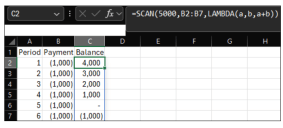
How to replace running totals in Excel
Accountants routinely copy down formulas in Excel to track cumulative balances, such as cash flow and retained earnings, but there is a better way. This JofA Technology Q&A article shows the way with step-by-step instructions and a video walkthrough.