The first item of business for the Private Company Council (PCC), which will be chaired by Billy Atkinson, will be working with FASB to continue developing a framework for making decisions about whether and when U.S. GAAP should be modified for private companies. The PCC—created by the Financial Accounting Foundation
Advertisement
TOPICS
Accounting & reporting
A quest for relevance
The recent efforts by the accounting profession to improve private company financial reporting revealed a clear and strong demand by small and medium-size entities, the CPAs who serve them, and those who use their financial statements for a more robust and reliable financial reporting framework when GAAP is not required.
Financial reporting
Adjustments for the time value of money, which have generated some opposition from stakeholders, are likely to remain a part of the converged revenue recognition standard that is being jointly developed by FASB and the International Accounting Standards Board (IASB). The boards tentatively affirmed a proposal in the 2011
Impairment testing: Effectively using the qualitative assessment
Historically, many organizations have conducted goodwill and indefinite-lived intangible asset impairment testing by collaborating with valuation professionals and other advisers to measure fair value of their reporting units and indefinite-lived intangible assets. With recent changes to impairment testing and, specifically, the introduction of optional qualitative assessments to potentially avoid the
IASB proposes limited classification, measurement changes to financial instruments standard
Limited changes to IFRS standards for classification and measurement of financial instruments were proposed Wednesday in an International Accounting Standards Board (IASB) exposure draft. The proposal would change IFRS 9, Financial Instruments, as part of a larger convergence project with FASB as the boards reform accounting for financial instruments, which
FASB proposes narrowing scope of offsetting disclosures
A new proposal would narrow the definition of financial instruments in FASB’s recently implemented standard on disclosures about offsetting assets and liabilities. FASB on Monday issued a Proposed Accounting Standards Update (ASU), Balance Sheet (Topic 210): Clarifying the Scope of Disclosures About Offsetting Assets and Liabilities. Comments from stakeholders are
SEC Chairman Schapiro to step down; Walter designated as replacement
SEC Chairman Mary Schapiro, who has led the agency’s response to the financial crisis, announced Monday that she will step down Dec. 14. President Barack Obama designated Elisse Walter, a current SEC commissioner, as chairman upon Schapiro’s departure. Walter can serve without Senate approval through December 2013 because the Senate
FASB, IASB tentatively change revenue recognition constraint
The cumulative amount of revenue entities recognize under a new converged standard should not be subject to a significant revenue reversal or downward adjustment under guidance tentatively approved this week by FASB and the International Accounting Standards Board (IASB). The boards met Monday by videoconference to discuss elements of the
IASB to add member from U.S.
U.S. representation on the International Accounting Standards Board (IASB) won’t decrease with the end of Paul Pacter’s term, as another U.S. representative, Mary Tokar, has been appointed to the board. Tokar, a CPA, has served more than 10 years as the global leader for KPMG’s international financial reporting group, helping
FASB to draft ASU on presenting items reclassified out of accumulated OCI
FASB has directed its staff to prepare an exposure draft of an Accounting Standards Update (ASU) on presentation of items reclassified out of accumulated other comprehensive income (OCI), according to the board’s website. During a meeting Wednesday, the board discussed feedback from stakeholders on the exposure draft issued in August,
Hot tips: SEC fields 3,000 whistleblower complaints in 12 months
Roughly 3,000 tips on alleged wrongdoing were passed on to the SEC in the first full fiscal year of a new whistleblower program. Tips came from all 50 states and 49 countries, according to an annual report on the program for the fiscal year that ended in September. The program
FASB’s developing model “totally” changes impairment concept
The new concept of recognizing impairment of financial instruments based on expected credit losses, which FASB is developing, will represent a substantial change in industry philosophy and practice, according to board member Lawrence Smith. “I think we’ve changed the concept totally,” Smith said Friday during a webcast devoted to explaining
New financial reporting proposal for going concern gaining steam
Going-concern financial reporting in the United States appears headed for new requirements after FASB decided to adopt a new model this week in a project that still has several issues to be decided before the scheduled release of an exposure draft in the first half of next year. The model
FASB extends comment deadline for disclosure framework
In recognition of the damage caused by Hurricane Sandy, FASB has extended the comment deadline for its disclosure framework project to Nov. 30. The deadline for comments on its Invitation to Comment on a disclosure framework had been Nov. 16. The objective of the project is to improve effectiveness of
IASB creating forum; FASB extends private company comment deadline
The International Accounting Standards Board (IASB) is proposing the creation of a 12-member forum of national standard setters and regional bodies. In an Invitation to Comment (ITC) issued Thursday, the IASB proposed that the Americas, Asia-Oceania and Europe each should get three automatic seats on the forum, which will provide
AICPA proposes Financial Reporting Framework for SMEs
Traditional accounting principles form the foundation for a new approach to financial reporting that the AICPA is developing for small and medium-size entities (SMEs) and released for public comment Thursday. The proposed Financial Reporting Framework for SMEs (FRF-SME) is designed to emphasize familiar accounting concepts such as historical cost and
Applying the principles: COSO proposal relates framework to external financial reporting
News reports show the frightening weather satellite images of a hurricane that is causing concern for leaders of an automobile manufacturing plant. The storm’s possible effects on the supply chain seem obvious as it approaches one of the company’s suppliers. The problems this could cause for internal control over the
Financial reporting
The SEC approved disclosure rules designed to increase transparency around companies’ use of so-called “conflict minerals” and payments to governments for access to natural resources for extraction purposes. The rules, advocated by certain human rights groups, will implement two sections of the Dodd-Frank Wall Street Reform and Consumer Protection
Embracing change
Richard J. Caturano, CPA, CGMA Title: Executive managing partner, Boston office, McGladrey LLP City: Boston Education: B.S. in accounting, M.S. in taxation, Bentley College Date of birth: Nov. 18, 1952 Family: Wife, Barbara; son, Anthony; daughter, Christina Ryan; son-in-law, Shane Ryan; grandson, Rhys Richard Ryan Device he can’t live without:
Framework for SMEs emphasizes relevance, historical costs
As David Morgan revealed some of the specific principles that will be contained in the proposed Financial Reporting Framework for Small and Medium-Sized Entities, one common theme emerged. “We don’t get into a lot of things that we don’t consider relevant,” Morgan told the audience Monday at the AICPA fall
Features






FROM THIS MONTH'S ISSUE
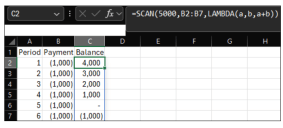
How to replace running totals in Excel
Accountants routinely copy down formulas in Excel to track cumulative balances, such as cash flow and retained earnings, but there is a better way. This JofA Technology Q&A article shows the way with step-by-step instructions and a video walkthrough.