The AICPA Health Care Expert Panel has developed technical guidance on the application in consolidated financial statements of a recent accounting standards update for health care entities. Technical Practice Aid (TPA) 6400.47 provides nonauthoritative guidance on the application of FASB Accounting Standards Update (ASU) No. 2011-07, Health Care Entities (Topic 954):
Advertisement
Final regulations issued on deduction of prepaid mortgage insurance premiums
The IRS on Friday issued final regulations governing the allocation of prepaid mortgage insurance premiums for periods after Dec. 31, 2010 (T.D. 9588). The final regulations adopt rules that were issued as proposed and temporary regulations in 2009 (T.D. 9449; REG-107271-08). The deduction under Sec. 163(h)(3)(E) for mortgage insurance premiums,
Financial matters are top cause of couples’ spats, survey shows
Couples argue more about financial matters than any other topic, according to a Harris Interactive survey conducted for the AICPA. Twenty-seven percent of respondents in a national survey who are married or living with a partner said disagreements over money are most likely to prompt an argument. None of the
IASB proposes package of IFRS amendments
As part of its annual improvements project, the International Accounting Standards Board (IASB) published for public comment Thursday an exposure draft of proposed, narrowly scoped amendments to 11 IFRSs. Subjects of the proposals include short-term receivables and payables in IFRS 13, Fair Value Measurement; recognition of deferred tax assets for
FASB to revisit going-concern question
FASB on Wednesday decided to revisit the question of whether management should be required to assess if there is doubt about an entity’s ability to continue as a going concern. The decision came as a result of FASB’s recent decision not to pursue going-concern-type disclosures in its project about liquidity
Terms in OIC agreement take meaning from Code, court holds
The Second Circuit Court of Appeals held on Wednesday that the terms “refund” and “overpayment” in an offer-in-compromise (OIC) agreement are specialized tax terms that take their meaning from the Internal Revenue Code and are not given their “plain English” meanings, despite the colloquial tone of the agreement (Sarmiento, No.
Basis reporting rules for debt instruments and options postponed for one year
In Notice 2012-34, the IRS postponed the basis and gain reporting rules under Secs. 6045(g), 6045(h), 6045A, and 6045B for debt instruments and options, so they will apply to those acquired on or after Jan. 1, 2014. The postponement was in response to the many comments the IRS received on
Small businesses in U.S., Canada aren’t using accountants’ complete skills, survey shows
Efforts to get accountants more fully engaged with clients have found limited success with small businesses in the United States and Canada, a new survey shows. Forty per cent of small businesses surveyed in the U.S. and Canada do not even use an outside accountant, according to a report by
COSO postpones release of internal control framework until 1Q 2013
After receiving extensive feedback, the Committee of Sponsoring Organizations of the Treadway Commission (COSO) announced Monday that it expects to delay the release of its updated internal control framework until the first quarter of 2013. That’s a slightly later debut than COSO predicted for the framework in December, when it
HSA inflation adjustments issued for 2013
On Friday, the IRS issued the inflation-adjusted figures for the annual contribution limitation for health savings accounts (HSAs) and the minimum deductible amounts and maximum out-of-pocket expense amounts for high-deductible health plans for calendar year 2013 (Rev. Proc. 2012-26). Under Sec. 223, individuals who participate in a health plan with
IRS proposes expanding tax return information it will disclose to HHS under health care acts
On Friday, the IRS issued proposed regulations relating to how it will release certain tax return information to the Department of Health and Human Services (HHS), as required by 2010’s health care legislation (REG-119632-11). The proposed regulations describe certain items the IRS will disclose in addition to those required by
Congressional subcommittee hearing centers on expiring tax provisions
The term “winners and losers” sprang up several times on Thursday in a congressional subcommittee hearing on expired or soon-to-expire tax provisions. Congress should not pick them, witnesses contended. However, they also lined up to tell the House Ways and Means Select Revenue Subcommittee why a particular tax credit or
FASB makes decisions in project to define nonpublic entity
FASB made two important decisions Wednesday in its project to define a nonpublic entity. An entity that is required to file or furnish financial statements with the SEC to issue securities to be traded in a public market should not be included in the definition of a private company, FASB
Young Americans fail to frequently check bank balances, survey shows
Although technology has made it easier to track finances, many Americans aren’t taking advantage of the opportunity, according to a new survey. Seventeen percent of 18- to 34-year-olds check their bank accounts daily, according to a national telephone survey conducted for the AICPA by Harris Interactive in recognition of National
Supreme Court affirms Home Concrete, says 6-year limitation period does not apply to overstated basis
On Wednesday, the U.S. Supreme Court affirmed the Fourth Circuit’s decision in Home Concrete & Supply, LLC, which had ruled that the extended six-year statute of limitation under Sec. 6501(e)(1)(A), which applies when a taxpayer “omits from gross income an amount properly includible” in excess of 25% of gross income
FASB and IASB make progress on insurance project
FASB and the International Accounting Standards Board (IASB) reached tentative decisions on reinsurance and issues related to policy loans and contract modifications, including riders, in their ongoing, joint convergence project on insurance. The progress on insurance during last week’s joint board meeting was reported on FASB’s website, where the full
Tweedie: U.S. decision is key to future of international standards
Three former standard setters – who served the accounting profession through the early days of the financial crisis – talked at length Tuesday during a two-hour panel discussion in New York about the U.S. adoption of IFRS, integrated reporting, and the political pressure that standard setters can face. “Shaping the
Taxpayers can deduct certain local lodging expenses under proposed rules
The IRS issued proposed regulations on Tuesday that permit employees to treat certain expenses paid or incurred for local lodging as deductible business expenses (REG-137589-07). Under Sec. 262(a), living expenses paid or incurred when not traveling away from home are considered nondeductible personal expenses. However, in certain circumstances, the proposed
Final standards in convergence projects expected by mid-2013
FASB and the International Accounting Standards Board (IASB) expect to issue final, joint standards in their major convergence projects by mid-2013, according to a report to the Financial Stability Board (FSB) Plenary on Accounting Convergence posted Monday on the IASB website. The boards expect to begin redeliberations on their joint
Tweedie, Herz, Cherry to discuss financial reporting
Last spring, when he was chairman of the International Accounting Standards Board (IASB), Sir David Tweedie made a case for principles-based accounting standards. “I believe that this approach is superior,” he said during a speech to the U.S. Chamber of Commerce. Tweedie was advocating for standards based on principles rather
Features




FROM THIS MONTH'S ISSUE
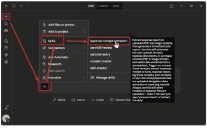
Build reusable Skills in Anthropic’s Claude AI
Instead of rewriting prompts each time, CPAs can turn routine tasks into reusable AI Skills. This Technology Q&A walks through how to build Claude Skills that process files, ask setup questions, and export clean Excel outputs.
From The Tax Adviser
April 30, 2026
Current developments in taxation of individuals: Part 2
April 30, 2026