- podcast
- NEWS
What SOC 2 plus AIUC-1 adds to AI assurance, and what’s next
Sponsored by Thomson Reuters
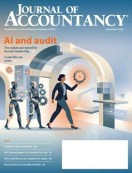
Amy Pawlicki, the AICPA’s vice president–Assurance & Advisory Innovation, joined the Journal of Accountancy podcast to detail the new SOC 2 plus AIUC-1 engagement, explaining how it adds to AI assurance and the role that CPAs play.
SOC 2 reports are independent examinations performed by a licensed CPA under AICPA attestation standards. The AICPA and the Artificial Intelligence Underwriting Company (AIUC) teamed up to develop an assurance certification that provides the first comprehensive, independent review of business risk related to AI systems and agents.
Pawlicki previews what’s next for assurance of frontier AI models and summarizes two SOC 2 exposure drafts, on the trust services criteria and description criteria, which are open for comment through Jan. 15, 2027.
What you’ll learn from this episode:
- How building trust around AI sits in the profession’s “wheelhouse” regardless of how legislative initiatives related to AI safety shake out.
- The specific value of AIUC-1 tests related to AI agent behavior, not just policies related to agents.
- The joint expertise of CPAs and the AIUC’s consortium of security leaders.
- What proposed changes to the SOC 2 trust services criteria and description criteria mean for practitioners — and when comments are due.
Play the episode below or read the edited transcript:
— To comment on this episode or to suggest an idea for another episode, contact Neil Amato at Neil.Amato@aicpa-cima.com.
Transcript
Neil Amato: Welcome back to the Journal of Accountancy podcast. This is Neil Amato with the JofA. Our topic today with an AICPA vice president is the AICPA jointly developing an assurance engagement that provides the first comprehensive, independent review of business risk related to AI systems and agents. That conversation coming up after this brief sponsor message.
[Sponsor message]
Amato: Amy Pawlicki, who has been a repeat guest on the podcast — she’s back to discuss that assurance engagement topic. Amy, thank you for being on.
Pawlicki: Thanks for having me. It’s always great to be here.
Amato: We are glad to have you back and glad to discuss this topic. In October, the AICPA announced it was partnering with the Artificial Intelligence Underwriting Company on a new assurance engagement. What are the particulars of this offering?
Pawlicki: It’s very similar to a traditional SOC 2-plus engagement. For those who may know, there have been a number of SOC 2 plus engagements that have gained popularity in the marketplace, like SOC 2 plus HIPAA, SOC 2 plus [National Institute of Standards and Technology (NIST) framework], SOC 2 plus CSA STAR. And what that basically entails is it is a traditional SOC 2 engagement, but it encompasses an additional set of criteria related to a specific subject matter. And in this case, the additional criteria relate to the AIUC’s requirements that address risks around the behavior of AI agents.
Amato: And so AIUC again is the Artificial Intelligence Underwriting Company. AIUC-1 is its certification. So why is now the time that SOC 2 is now being paired with AIUC-1?
Pawlicki: As everyone is aware, the usage of AI has now become really almost ubiquitous. And with so many relying on AI to both complete tasks and help inform decisions, the safety, security, and reliability of AI tools and in particular agents has become of paramount importance. And as a result of that, regulators and legislators are also increasingly focused on building trust in AI — for example, the recent White House accord, which you might have heard of. And while that accord does not have any regulatory authority, it does call out external audits explicitly, and it focuses on internal controls, which is clearly the wheelhouse of the CPA profession. We also see a lot of legislative activity at both the state and the federal legislative branches looking to bring safety and security to AI that the public is relying on.
Amato: What would you say that the joint offering, this pairing of AIUC-1 and a SOC 2 report, what does it provide that a SOC 2 report alone doesn’t?
Pawlicki: From the beginning, some of the members of the AIUC consortium, who really represent sort of a who’s who of CISOs and other professionals from major frontier AI developers, were calling for a SOC 2 for AI. And this is because while SOC 2 was created for service organizations and still serves that market, it covers system reliability for many software vendors and organizations that are developing and deploying AI and specifically deploying AI agents.
So the joint SOC 2 plus AIUC-1 engagement covers both the reliability of the underlying system as it relates to security, privacy, confidentiality, processing integrity, and availability. That’s the SOC 2 attestation piece that the auditor is assessing against the AICPA trust services criteria, and that’s an annual examination engagement under the AICPA attestation standards. While the AIUC-1 certification piece covers specified agents and their platforms from the perspective of their security, safety, and reliability risks, specifically including data and privacy, security, safety, reliability, accountability, and society, which is addressed through quarterly technical evaluations or red-teaming that specifically addresses real-world agentic risks.
So they’re actually testing how the agents are behaving. And not only are they testing quarterly, but the AIUC technical standards are constantly updated and transparently available. And they go beyond policies to test how agents are actually behaving.
So there are a lot of great frameworks out in the marketplace today for governance over AI, frameworks like the NIST AI Risk Management Framework, ISO 42001, the EU AI Act — there are many. But this specifically goes to sort of the safety and reliability and security side of things, not just that there are policies in place or that the governance is strong, but how are these agents actually behaving and how safe is the underlying system?
Amato: This is the Journal of Accountancy podcast, so I have to ask. What role do CPAs play in all of this?
Pawlicki: CPAs are the experts and trusted providers of independent assurance. And of course, SOC 2 engagements, which are performed under the AICPA attestation standards, can only be performed by licensed CPAs. So this joint engagement is reserved for licensed CPAs only. That being said, through SOC 2, cyber, and other engagements, CPAs have been bringing trust and confidence to information and systems used for decision-making through assurance against suitable and measurable criteria for decades.
In this case, it’s a little bit different because AI is moving so quickly that the technical requirements to test AI safety, security, and reliability really must be developed and maintained by the experts closest to frontier AI development and deployment. And that is exactly the role of AIUC’s consortium and its over 300 CISO and security leaders who are overseeing the development and the maintenance of the AIUC criteria.
So CPAs bring the assurance, the framework for providing meaningful assurance, and they bring independence and knowledge of internal controls. Whereas the AIUC consortium is bringing that deep AI technical expertise to help develop and maintain the criteria against which the CPAs are performing their work.
Amato: And to address one acronym. I believe I heard CISOs, chief information security officers. Just want to make sure I have that right.
Pawlicki: You have it right.
Amato: And so AIUC-1 specifically covers agents. What is next for AI assurance related to the broader frontier AI ecosystem?
Pawlicki: So this is exactly the question that regulators and legislators are actively asking right now, as they should be. So agents are where AIUC-1 certifies today, together with SOC 2 for companies that need both that comprehensive look at their system reliability as well as the agentic behavior. And this covers off a major category of AI risk today, so it is significant. However, there are other categories besides agents. And so the next category that we look at are frontier AI models, both open and closed.
Those are next on the road map, as is robotics. And risk taxonomies are currently being worked on to address the security, safety, and reliability of risks related to these other frontier AI categories. Examples that you may want to think about when you’re talking about agents, the first joint SOC 2 plus AIUC-1 was, I believe, announced for Legora, which is an agentic platform in the legal space. If you’re looking at models, closed models include, for example, OpenAI and Anthropic, which most people are familiar with.
And then if you’re thinking about robotics, I think the most obvious example that everyone will go to is self-driving cars and companies like Tesla. And so all of those require independent assurance that looks at safety, security, and reliability. But there are different risks related to each one of those categories. And so those risk taxonomies will differ. They are being worked on, and that will complement AIUC-1 ultimately once those are ready.
Amato: Also related to SOC 2 reporting, a comment deadline is approaching on two exposure drafts related to, first, SOC 2 trust services criteria and then also the description criteria. What’s a short summation of those exposure drafts, and what is the comment deadline?
Pawlicki: The AICPA Assurance Services Executive Committee SOC 2 Working Group has been focused on evaluating the usability of SOC 2 reports and identifying enhancements to the SOC 2 framework to better meet the needs of report users and evolving market demands. And so this includes changes to the trust services criteria, which are used to evaluate controls in SOC 2 engagements. These changes are intended to better reflect current and emerging technologies, including the addition of AI points of focus for situations where AI is present in the service organization systems that are being examined in a SOC 2 engagement.
The changes are also intended to reduce duplication, streamline the criteria, and improve clarity for practitioners and report users. Similarly, the SOC 2 description criteria have also been updated to provide greater clarity around the information that management should include in their system description. Comments on both of these exposure drafts are due Jan. 15, 2027. And then once those criteria are finalized, post-review of comments, and disposition of comments, updates to the SOC 2 guide will follow later in 2027.
Amato: That’s great. Thank you for that. We’ll have links in the show notes to JofA news coverage on both of those, as well as the AICPA joint development of the assurance engagement with AIUC. Amy Pawlicki, we’ve gone through this pretty high-level, pretty quickly. Anything you’d like to add as a closing thought today?
Pawlicki: Just to say that these are exciting times. This is a tremendous opportunity. CPAs have had boots on the ground looking at internal controls around information systems for decades and have obviously the expertise and the science of providing meaningful assurance. And AI presents an incredible opportunity for independent third-party assurance that really does serve the public interest.
Amato: That’s Amy Pawlicki on the JofA podcast. Thanks again.