Skip to content
AICPA-CIMA
  • AICPA & CIMA:
  • Home
  • CPE & Learning
  • My Account
Journal of Accountancy
  • TECH & AI
    • All articles
    • Artificial Intelligence (AI)
    • Microsoft Excel
    • Information Security & Privacy

    Latest Stories

    • AI for CPAs: From efficiency tool to decision engine
    • 9 tips to write more effective AI prompts
    • People skills: You are a human being, not a human doing
  • TAX
    • All articles
    • Corporations
    • Employee benefits
    • Individuals
    • IRS procedure

    Latest Stories

    • IRS announces terms of new conservation easement settlement opportunity
    • Another settlement offer planned in IRS conservation easement cases
    • CP53E notice tied to paper-check transition causes confusion
  • PRACTICE MANAGEMENT
    • All articles
    • Diversity, equity & inclusion
    • Human capital
    • Firm operations
    • Practice growth & client service

    Latest Stories

    • IRS announces terms of new conservation easement settlement opportunity
    • AI for CPAs: From efficiency tool to decision engine
    • Another settlement offer planned in IRS conservation easement cases
  • FINANCIAL REPORTING
    • All articles
    • FASB reporting
    • IFRS
    • Private company reporting
    • SEC compliance and reporting

    Latest Stories

    • SEC proposes semiannual reporting option for public companies
    • SEC proposes amendments to small entity definitions
    • Key signals from the SEC-PCAOB conference point to a busy new year
  • AUDIT
    • All articles
    • Attestation
    • Audit
    • Compilation and review
    • Peer review
    • Quality Management

    Latest Stories

    • Proposed new sustainability information AT-C sections
    • Proposed revisions to examination and review engagements in the attestation standards
    • AICPA urges use of its stablecoin criteria in GENIUS Act rulemaking
  • MANAGEMENT ACCOUNTING
    • All articles
    • Business planning
    • Human resources
    • Risk management
    • Strategy

    Latest Stories

    • AI for CPAs: From efficiency tool to decision engine
    • Audit report card: More internal audit teams suffered cuts in 2025
    • Optimism, while tempered, is up among finance leaders
  • Home
  • News
  • Magazine
  • Podcast
  • Topics
Advertisement
  1. newsletter
  2. Extra Credit
Extra Credit Cover

Tips for better PowerPoint presentations

Try these ideas to hold students’ interest during lectures with slides.

By Samiha Khanna
January 15, 2019

Please note: This item is from our archives and was published in 2019. It is provided for historical reference. The content may be out of date and links may no longer function.

Related

November 13, 2018

4 books that can improve your teaching

October 9, 2018

Tips and ideas for teaching Excel

TOPICS

  • Accounting Education

It may sound spiritual, but the “conference prayer” is not actually a moment that inspires much faith. According to seasoned presenter Peter Margaritis, CPA, it might be just the opposite.

“The ‘conference prayer’ is when a speaker looks out at their audience and feels as if they’re on a pulpit instead of a stage because all the audience members have their heads bowed as if they’re in prayer (because they’re reading their email or checking social media),” Margaritis wrote in his 2018 book Taking the Numb Out of Numbers: Explaining and Presenting Financial Information with Confidence and Clarity.

There are many reasons a presenter starts to lose an audience, but a lackluster PowerPoint doesn’t have to be one of them. According to Margaritis and accounting professors who frequently use PowerPoint in their work, instructors can use a number of easy strategies to make dense and text-heavy content more engaging to students. Here are a few of them:

Put your audience first. Misjudging what the audience needs to know is one of the most common mistakes people make in their presentations, Margaritis said. Too often, he observed, presenters are focused on the information and aren’t thinking about the people they’re trying to communicate it to, so they may “cram facts, data, and bullet points into the presentation because they feel that this is what the audience wants.”

Instead, he suggested, appeal to your audience by finding a way to tell them a story — even if the information you’re presenting is very technical. One idea he recommends is to use metaphors or analogies to explain complicated ideas — such as the time he explained variable interest entities by describing them as an unwelcome relative.

Use fewer words. Even when presenters prioritize the needs of their audience, the volume of information they include on each slide is often still too much, said Lynette I. Wood, CPA, Ph.D., associate professor of accounting at Winston-Salem State University in North Carolina. She suggests using brief phrases rather than complete sentences.

A tactic Velina Popova, Ph.D., assistant professor of accounting at Kennesaw State University in Georgia, recommends is to put only your main ideas on the slides and present the details verbally as you lecture. That keeps students from reading the slides while you’re explaining something — and perhaps missing the point you’re trying to make, she said.

Advertisement

Use visuals to represent big ideas. One of Margaritis’s key recommendations is to think of PowerPoint as “an aid in your presentation and not a crutch.” Most of the time, he said, his slides contain a single picture that summarizes the point he’s making and helps spark discussion.

Generally, it’s best to use photos that have been labeled free to share and use. Margaritis suggests using tools within the Google Images search function to sort photos by usage rights (see below). For royalty-free photos, Popova and Wood use sources such as pixabay.com.
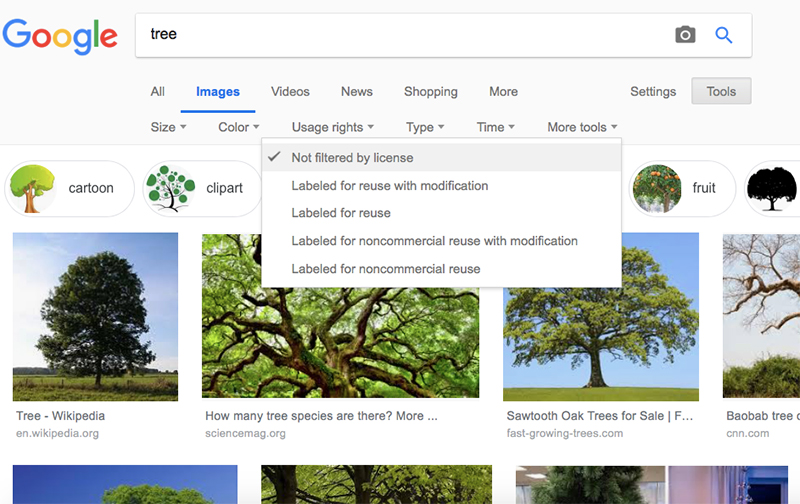
google-images-rights


Foster conversations.
Today’s audiences don’t want just to be talked at — they want to be a part of the experience, Margaritis said. “They want to have a two-way conversation,” he said.

To help keep students engaged, Popova recommends using tools that allow them to interact. She uses PollEverywhere to survey her students and create word clouds in real time that allow her to gauge whether they are understanding the content. Colleagues use similar interactive tools for presentations, such as Socrative and Mentimeter, she said.

To encourage conversation, Margaritis allows the audience some time to process what they’ve heard so far through an approach known as QRS: question, response, share. (He credits David Brobeck of Walsh University in Canton, Ohio, with the QRS strategy. Faculty may also know it as the “think, pair, share” technique).

“I will post a question, have them reflect on the issue for 30 seconds, and then spend two to three minutes sharing their thoughts with their partners,” he said.

This approach makes an audience more likely to interact with you, he said, “because it gives them time to reflect on the question and share their thoughts to validate their thinking before sharing with the entire class.”

Advertisement

Be prepared for questions and tangents. It takes effort to give an engaging presentation and keep track of time, all while standing in front of dozens of people. The key is lots of practice, Popova said.

“Over the years I have learned to get back on topic if distraction is presented by knowing which slides I could skip if someone takes me off course,” she said, “and to be flexible enough to skip those ‘disposable’ slides without hurting my main point.”

Having that flexibility in the presentation actually seems key to fostering discussion and learning, Margaritis said. He allows audiences to go off on tangents if they prove productive. “We need to give the audience the latitude to veer off the stated course the instructor has set, to open their curiosity and begin to explore,” he said.

Samiha Khanna is a freelance writer based in North Carolina. To comment on this article or to suggest an idea for another article, contact senior editor Courtney Vien at Courtney.Vien@aicpa-cima.com.


Advertisement

latest news

May 13, 2026

IRS announces terms of new conservation easement settlement opportunity

May 13, 2026

AI for CPAs: From efficiency tool to decision engine

May 12, 2026

Another settlement offer planned in IRS conservation easement cases

May 8, 2026

CP53E notice tied to paper-check transition causes confusion

May 7, 2026

IRS establishes program for rulings on significant issues

Advertisement

Most Read

CP53E notice tied to paper-check transition causes confusion
AICPA ENGAGE networking tips: How to make meaningful connections
House panel backs repeal of BOI reporting by domestic companies
Optimize Windows 11 with these 8 settings tweaks
5 human competencies CPAs need in the AI age
Advertisement

Podcast

May 7, 2026

The Auditing Standards Board’s priorities for 2026 and beyond

April 30, 2026

The risks of quick‑turn SOC engagements and what CPAs should know

April 23, 2026

How to start a CPA practice: Lessons from a firm founder and a risk expert

Features

5 human competencies CPAs need in the AI age

5 human competencies CPAs need in the AI age

People skills: You are a human being, not a human doing

People skills: You are a human being, not a human doing

Avoiding a big tax bill on inherited IRAs

Avoiding a big tax bill on inherited IRAs

Are you making the most of LinkedIn?

Are you making the most of LinkedIn?

SPONSORED REPORT

Tools for finding CAS clients

How to find the right CAS clients

The key to success with CAS is selecting the best clients. Tools like ideal client profiles (ICPs), buyer personas, and even artificial intelligence can help identify the businesses that best fit each CAS practice.

From The Tax Adviser

April 30, 2026

Current developments in taxation of individuals: Part 2

April 30, 2026

Hedge funds: Tax structuring, planning, and compliance

March 31, 2026

Current developments in taxation of individuals: Part 1

March 31, 2026

Current Developments in Taxation of Individuals: Part 1

MAGAZINE

May 2026

May 2026

May 2026
April 2026

April 2026

April 2026
March 2026

March 2026

March 2026
February 2026

February 2026

February 2026
January 2026

January 2026

January 2026
December 2025

December 2025

December 2025
November 2025

November 2025

November 2025
October 2025

October 2025

October 2025
September 2025

September 2025

September 2025
August 2025

August 2025

August 2025
July 2025

July 2025

July 2025
June 2025

June 2025

June 2025
view all

View All

http://JofA_Default_Mag_cover_small_official_blue

PUSH NOTIFICATIONS

Learn about important news

This quick guide walks you through the process of enabling and troubleshooting push notifications from the JofA on your computer or phone.

CPA LETTER DAILY EMAIL

CPA Letter Logo

Subscribe to the daily CPA Letter

Stay on top of the biggest news affecting the profession every business day. Follow this link to your marketing preferences on aicpa-cima.com to subscribe. If you don't already have an aicpa-cima.com account, create one for free and then navigate to your marketing preferences.

Connect

  • X Logo JofA on X
  • facebook JofA on Facebook

HOME

  • News
  • Monthly issues
  • Podcast
  • A&A Focus
  • PFP Digest
  • Academic Update
  • Topics
  • RSS feed rss feed
  • Site map

ABOUT

  • Contact us
  • Advertise
  • Submit an article
  • Editorial calendar
  • Privacy policy
  • Terms & conditions

SUBSCRIBE

  • Academic Update
  • CPE Express

AICPA & CIMA SITES

  • AICPA-CIMA.com
  • Global Engagement Center
  • Financial Management (FM)
  • The Tax Adviser
  • AICPA Insights
  • Global Career Hub
AICPA & CIMA

© 2026 Association of International Certified Professional Accountants. All rights reserved.

Reliable. Resourceful. Respected.