In Notice 2012-52, the IRS explained that contributions to disregarded single-member limited liability companies (SMLLCs) wholly owned and controlled by a U.S. charity (as defined in Sec. 170(c)(2)) will be treated as if made directly to the U.S. charity. This rule applies for purposes of the substantiation requirements under Sec.
Advertisement
NEWS
Draft of not-for-profit guide scheduled for Aug. 15 release
CPAs performing work for not-for-profits will find guidance dedicated specifically to them in a working draft of a proposed audit and accounting guide, Not-for-Profit Entities, scheduled for release Aug. 15 by the AICPA’s Financial Reporting Executive Committee (FinREC). The AICPA will be requesting that comments on the proposed guide be
Guidance examines how to respond to questions about clients’ loan applications
CPAs can find nonauthoritative guidance on how to respond to requests for client information in connection with a pending loan application from Technical Question and Answer (TPA) 9110.19, which was developed by the AICPA Accounting and Auditing Technical Hotline. Prospective borrowers are asked to furnish only limited information in connection
Guidance provided on health care accounting for ICD-10 implementation costs
The AICPA Health Care Expert Panel has developed nonauthoritative guidance on how health care entities should account for costs incurred in connection with the implementation of the 10th edition of the International Classification of Diseases (ICD-10). By Oct. 1, 2013, the U.S. health care system is scheduled for a transition
Most U.S. small businesses lack disaster-recovery plans
More than 60% of U.S. small businesses do not have a formal emergency-response plan and fail to back up their financial data off-site, leaving them vulnerable to catastrophic data loss in the event of a natural disaster. The Small Business Disaster Preparedness Study, conducted by software maker Sage North America,
Four steps to formalize internal audit’s strategic impact
Internal audit isn’t just about compliance anymore. Increasingly, the function’s role is being incorporated into the broader business strategy – from mulling over major capital projects to advising on mergers and acquisitions. But executives say they need to do a better job of formally describing the role internal auditors will
TIGTA recommends steps for IRS to reduce fraudulent refunds from identity theft
In a report released on Thursday, the Treasury Inspector General for Tax Administration (TIGTA) suggested that the IRS had missed 1.5 million tax returns with potentially identity-theft-related fraudulent tax refunds in excess of $5.2 billion for the 2011 filing season (TIGTA Rep’t No. 2012-42-080). The IRS itself reported that it
FAF reviewing FASB business combinations standard
The Financial Accounting Foundation (FAF) is gathering survey participants for a post-implementation review of a FASB standard on business combinations that generated controversy after it was issued in 2007. A joint project with the International Accounting Standards Board (IASB) resulted in FASB Statements No. 141(R), Business Combinations, and No. 160,
PCAOB gives audit committees guidance on inspections of audit firms
In an effort to help audit committees make informed decisions, the PCAOB on Wednesday released a 26-page report describing how its inspections of audit firms work and how to gather information from audit firms about those inspections. PCAOB inspection reports are partly public and partly private. In the release, Information
Regulations finalize rules on entertainment use of business aircraft
On Tuesday, the IRS issued final regulations relating to the disallowance under Sec. 274 of deductions for the use of business aircraft for entertainment (T.D. 9597). The final regulations adopt, with some modifications, proposed regulations issued in 2007 (REG-147171-05), which in turn followed principles first expressed in Notice 2005-45. In
Prop. regs. would clarify who is subject to Sec. 274(n) limit on meal expenses
The IRS released proposed regulations under Sec. 274 clarifying which party is subject to the rule under Sec. 274(n)(1)(A) that limits the deduction for meals to 50% of the expenses incurred (REG-101812-07). As the IRS emphasized, only one party is intended to be subject to the limitation, and there has
FASB releases recommendations for private company framework
FASB on Tuesday released its initial staff recommendations on whether and when it will be appropriate to adjust financial reporting requirements for private companies. The recommendations are contained in a paper, Private Company Decision-Making Framework: A Framework for Evaluating Financial Accounting and Reporting Guidance for Private Companies. FASB on Tuesday
Pathways Commission releases final report; three-year implementation begins
Culminating two years of study and insights from teams representing diverse viewpoints in practice and academia, the Pathways Commission released its final report Tuesday on the future of higher education in accounting. The report, titled “Charting a National Strategy for the Next Generation of Accountants,” is available on the commission’s
FASB simplifies impairment testing of indefinite-lived intangible assets
The guidance for testing the impairment of intangible assets such as indefinite-lived trademarks, licenses and distribution rights has been simplified by FASB. FASB on Friday issued Accounting Standards Update (ASU) no. 2012-02, Intangibles—Goodwill and Other (Topic 350): Testing Indefinite-Lived Intangible Assets for Impairment. The standard applies to testing the decline
IASB to develop IFRS guidance for ‘micro-sized entities’
Very small companies are expected to receive IFRS financial reporting guidance tailored to their needs. The staff of the International Accounting Standards Board (IASB) will develop guidance to help so-called “micro-sized entities” apply IFRS for Small and Medium-sized Entities (IFRS for SMEs) in their financial reporting. The IASB staff will
False internet rumors about “real estate transaction tax” worry taxpayers
The National Association of Realtors has some tax advice for users of the internet: Don’t believe everything you read. There has been a recent flare-up of chain emails purporting that, come Jan. 1, all real estate transactions will be subject to a 3.8% federal sales tax. The problem: That’s not
Lawmakers reflect on Sarbanes-Oxley’s effect on corporate culture
Former U.S. Sen. Paul Sarbanes and former U.S. Rep. Michael Oxley say the regulations they sponsored and saw signed into law a decade ago are not perfect, but led to changes in the corporate culture in the United States and abroad. Sarbanes, a Maryland Democrat, and Oxley, an Ohio Republican,
IFRS constitution change formally splits IASB chair, foundation CEO roles
The IFRS Foundation is changing its constitution to reflect the separation of the roles of the foundation’s CEO and the chairman of the International Accounting Standards Board (IASB). This move formalizes a separation that previously was implemented following an internal structure reorganization at the end of 2011. The chair of
Treasury releases model intergovernmental agreement for FATCA
The Treasury Department on Thursday released a model intergovernmental agreement designed to implement the information-reporting and withholding-tax provisions in the Foreign Account Tax Compliance Act (FATCA), which was enacted by Congress in 2010 to require foreign financial institutions (FFIs) to report to the IRS information about financial accounts held by
SOX’s anniversary marked with congressional debate on benefits and costs
A U.S. House of Representatives subcommittee on Thursday debated the benefits and costs of the Sarbanes-Oxley Act of 2002 (SOX)—and a bill that would decrease its scope—as the corporate governance law approached its 10th anniversary. The House Subcommittee on Capital Markets and Government Sponsored Enterprises heard sharply divided opinions from
Features





FROM THIS MONTH'S ISSUE
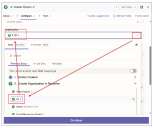
How to set up a simple automation in Zapier
When automating apps within the same tech ecosystem, that system’s automation options are highly effective. Tools like Zapier, though, allow automation across ecosystems. Learn how in this Tech Q&A article.
From The Tax Adviser
July 31, 2026
Current developments in S corporations
July 31, 2026