California Gov. Jerry Brown on Thursday signed a bill allowing CPAs from outside California to represent clients in the state without being subject to additional license requirements. The law takes effect on July 1, 2013. It will allow out-of-state CPAs to provide many services to their clients without obtaining a
Advertisement
NEWS
Draft instructions to Form 706 provide guidance on portability election
On Tuesday, the IRS posted a draft version of the instructions to Form 706, United States Estate (and Generation-Skipping Transfer) Tax Return, a follow-up to the draft Form 706 that was posted in August (see “Draft Form 706 provides check box to not elect portability”). The draft instructions provide more guidance
COSO proposals give real-world internal control examples
News reports show the frightening weather satellite images of a hurricane that’s causing concern for leaders of an automobile manufacturing plant. The possible effects on the supply chain as the storm approaches one of the company’s suppliers seem obvious. The problems this could cause for internal control over the company’s
U.S. attorneys are authorized to fight stolen identity refund fraud
In an effort to better combat crimes involving stolen identities and tax refund fraud, the Justice Department is changing the procedures it uses to handle such cases. Under Tax Division Directive No. 144, released on Wednesday, U.S. attorneys’ offices will no longer need prior authorization from the Justice Department’s Tax
FIN 48 among first priorities for new Private Company Council chair
The standard known as FIN 48 will be among the first issues the newly formed Private Company Council (PCC) discusses, Billy Atkinson said Wednesday after being named the council’s chairman. Atkinson said FASB Interpretation No. 48, Accounting for Uncertainty in Income Taxes, has been a concern for private company representatives.
Investor confidence in U.S. markets rises, CAQ survey shows
U.S. investors’ confidence in domestic capital markets has rebounded, but their faith in markets outside the United States has continued to decline, according to new research by the Center for Audit Quality (CAQ). Sixty-five percent of investors reported that they have some, quite a bit, or a great deal of
COSO seeks comment on internal control proposals
The Committee of Sponsoring Organizations of the Treadway Commission (COSO) is seeking public comment on a proposed document that explains how to apply its guidance to internal control over external financial reporting. COSO on Tuesday released an exposure draft of its Internal Control Over External Financial Reporting (ICEFR): Compendium of
Corporate equity reduction transaction guidance issued
The IRS issued proposed regulations governing the availability of net operating loss (NOL) deductions that are attributable to corporate equity reduction transactions (CERTs) under Secs. 172(b)(1)(E) and (h) (REG-140668-07). The CERT rules were enacted in response to the use of NOL carrybacks to finance leveraged buyout transactions and are intended
Private Company Council selections expected this month
A new system for creating exceptions to U.S. GAAP for private companies will move forward with the selection this month of members of the Private Company Council (PCC). During an informational webcast conducted Friday, FASB said the agenda for the Financial Accounting Foundation (FAF) includes a September date for PCC
IRS proposes changes to Circular 230 rules governing written tax advice
On Friday, the IRS released proposed regulations that would eliminate the complex rules in Circular 230 governing covered opinions (REG-138367-06). To replace the covered opinion rules, the proposed regulations would expand the requirements for written advice under Circular 230, Section 10.37. The proposed regulations would also make several other changes
AICPA urges Congress to quickly fix tax cliff
Congress must reach an agreement on expiring tax provisions as soon as possible because small businesses are being impeded from long-term tax and cash flow planning and prevented from making informed decisions. That is the message Jeffrey Porter, vice chair of the AICPA Tax Executive Committee, delivered to the House
Publicly traded property defined for determining issue price of debt instruments
The IRS issued final regulations defining “publicly traded property” to determine the issue price of a debt instrument (T.D. 9599). The final regulations adopt the rules proposed in January 2011 but with a few significant changes (REG-131947-10). Under the previous regulations (Regs. Sec. 1.1273-2), property was publicly traded (i.e., traded
Use of wrong delivery service results in dismissal of Tax Court petition
Taxpayers who chose the wrong type of FedEx delivery service did not get the benefit of the timely mailing/timely filing rule and as a result had their petition dismissed by the Tax Court (Scaggs, T.C. Memo. 2012-258). The taxpayers had filed a petition in Tax Court challenging an IRS notice
Scope of appropriate content, structure in auditor’s report under debate
Change apparently is coming to the auditor’s report, but views vary over the appropriate content and structure for reports, and particularly over the issue of “auditor commentary.” The question of appropriate content and structure for the auditor’s report was the subject of an International Auditing and Assurance Standards Board (IAASB)
Newly formed commission renews focus on ethnic diversity among CPAs
A new commission charged with increasing ethnic diversity in the accounting profession will hold its first quarterly meeting this week at the AICPA offices in Durham, N.C., the AICPA announced today. The formation of the National Commission on Diversity reflects a renewed determination within the profession to increase the retention
Malware growth maintains rapid pace as mobile threats surge
The number and complexity of cyberattacks, especially those targeting mobile devices, grew at an alarming pace in the second quarter, security technology company McAfee Labs said in its latest Threats Report. McAfee identified more than 8 million previously undiscovered samples of malicious software, or malware, during the three months that ended
Guidance issued on employee expense reimbursement arrangements
The IRS issued guidance on situations in which employers recharacterized wages as nontaxable reimbursements and whether they satisfied the business connection and other requirements to be treated as paid under an accountable plan under Sec. 62(c) (Rev. Rul. 2012-25). The revenue ruling covers four situations. In three of the four
Private-company financials often shielded from employees
Employees at publicly traded companies have an advantage when it comes to understanding the financial health of their companies. After all, public companies are just that: public. And they release detailed financial results each quarter for the world to see. Employees at private companies, however, aren’t as plugged in. Indeed,
Employee health insurance safe harbors expanded
The IRS expanded and revised optional safe harbors on which applicable large employers may rely in complying with requirements starting in 2014 to provide health insurance coverage to their full-time employees. The safe harbors, described in Notice 2012-58 and previous notices, provide methods of determining the full-time status of seasonal
CPAs sour on U.S. economy as election nears
After rising significantly at the end of 2011 and the beginning of 2012, CPA business leaders’ optimism over the U.S. economy has faded substantially in recent months, according to the latest AICPA Business & Industry Economic Outlook Survey. With an uncertain political environment in the run-up to the Nov. 6
Features




FROM THIS MONTH'S ISSUE
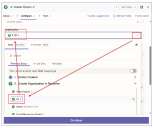
How to set up a simple automation in Zapier
When automating apps within the same tech ecosystem, that system’s automation options are highly effective. Tools like Zapier, though, allow automation across ecosystems. Learn how in this Tech Q&A article.
From The Tax Adviser
July 31, 2026
Current developments in S corporations
July 31, 2026