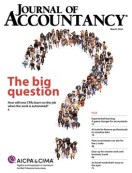
The trust imperative in the age of AI

I often say that audit equals trust. Capital markets and small businesses depend on it. Whether supporting investment decisions, financing, or growth, independent assurance creates confidence in critical information.
That is why one of the most important conversations facing our profession today is not simply artificial intelligence. It is about the role auditors will play in maintaining trust in an increasingly AI-enabled world. Technology has continually reshaped the profession, from spreadsheets and cloud computing to advanced analytics and automation. AI represents the next chapter, bringing new opportunities and considerations for the profession.
Some have asked whether AI will replace accountants and auditors. I believe that is the wrong question.
A better question is this: As AI becomes embedded in business processes and decision-making, who will help organizations, investors, regulators, and the public know that they can trust what it’s producing?
That is where our profession has an opportunity to lead.
CPAs have established frameworks for trust. Whether we are auditing financial statements, advising clients on tax positions and compliance, evaluating controls, or providing assurance over critical information, our role has been to create confidence. The rise of AI does not diminish that responsibility. It amplifies it.
Organizations, including CPA firms, are increasingly using AI to analyze data, support decisions, and improve operations. These capabilities offer tremendous potential, but they also create important questions. Are outputs reliable? Are controls effective? Can decisions be explained? How are risks managed?
Those are questions that lead to trust, which has always been at the heart of what CPAs do.
I am bullish about the future. I see AI helping keep the focus on our work that matters most. AI can analyze large volumes of information, identify anomalies, and direct attention to areas of greatest risk. Used responsibly, these capabilities have the potential to enhance the quality of the work CPAs perform every day.
But technology cannot replace professional judgment and the wisdom behind it.
I often talk about Human in the Lead™, a concept that emerged from our Rise2040 research. As more tasks become automated, judgment, skepticism, ethics, and leadership become more valuable, not less.
That thinking is influencing how the AICPA supports you. Through the Profession Ready Initiative, we are convening educators, practitioners, regulators, state CPA societies, and other stakeholders to help ensure emerging talent is prepared for the demands of an AI-influenced workplace.
We are also developing AI-focused resources and practice aids. Across the profession, AICPA volunteers and standard setters are evaluating how existing frameworks and standards can support consistent, high-quality reporting and assurance in emerging areas such as AI and digital assets. Initiatives such as the Dynamic Audit Solution (DAS) demonstrate how technology can enhance audit quality and efficiency while keeping professional judgment at the center of the process. At the same time, AI is being woven into broader efforts such as Rise2040 and the Rise Navigator, which help you anticipate future trends and develop the skills needed to thrive in a rapidly changing environment.
This is also reflected in the AICPA’s Trust Campaign, which highlights the value CPAs deliver through expertise, ethics, professional skepticism, and sound judgment. With more than 12.5 million views to date, the campaign has demonstrated the power of that message, and I’ve heard firsthand from members who have seen its impact in conversations with clients, employers, and prospective CPAs. Those qualities are not diminished by AI. If anything, they become more important as businesses and stakeholders seek confidence in an increasingly complex information landscape.
When I think about the future, I see four dimensions of AI: how auditors use AI, how tax professionals use AI, how business and industry professionals use AI, and how the profession provides assurance over AI systems, controls, and governance. Whether supporting audits, tax, and advisory services, or responsible AI adoption, our long-standing role as builders of trust positions us uniquely to serve an increasingly technology-driven marketplace.
Of course, none of this happens without investing in people. As technology evolves, current and future CPAs must continue to develop the technical knowledge, analytical capabilities, and professional competencies needed to succeed. Just as important, they must strengthen the critical thinking, communication, and ethical decision-making skills that technology cannot replicate.
Every generation of accountants has adapted to new technologies. AI is simply the latest chapter in that story.
Our profession’s future will continue to be built on trust, judgment, integrity, and service to the public interest. I encourage you to embrace the opportunities ahead, explore the insights in this issue’s feature articles, and consider how AI can help you create even greater value for your clients, organizations, and stakeholders.
Just as importantly, I invite you to join the conversation. Share your perspectives through the AICPA’s Engage365 communities and explore the Rise Navigator to better understand the trends, opportunities, and capabilities shaping the future of our profession. The future of accounting will not be determined by technology alone, but by professionals who choose to engage, learn, and lead.
About the author
Mark Koziel, CPA, CGMA, is the president and CEO of the AICPA and CEO of the Association of Certified International Professional Accountants.