Total user accounts or total number of posts are used to tout some companies’ success, but those statistics don’t necessarily indicate profitability.
Advertisement
TOPICS
Accounting & reporting
FASB’s proposed 2015 GAAP taxonomy available for comment
FASB released its proposed 2015 GAAP Financial Reporting Taxonomy on Friday and asked for public review and comment. The taxonomy is a list of financial reporting labels that are machine-readable and coded in XBRL. Users of financial statements can use the tags to electronically search for and process data so
COSO transition getting a close look from auditors
The early stages of implementation are over for many companies using the updated internal control framework of the Committee of Sponsoring Organizations of the Treadway Commission (COSO). In 2013, the framework—which had been in use since 1992—was updated to reflect changes in the business environment. U.S. public companies have been
FASB defines management’s going-concern responsibilities
FASB issued a new financial reporting standard Wednesday defining management’s responsibility to evaluate whether there is substantial doubt about an organization’s ability to continue as a going concern and to provide related footnote disclosures. The standard provides new guidance, as current GAAP does not describe management’s responsibility to evaluate whether
Clarified, revised SSARS approved for reviews, compilations, and engagements to prepare financial statements
The AICPA Accounting and Review Services Committee (ARSC) voted during its meeting this month to approve clarified and revised standards for reviews, compilations, and engagements to prepare financial statements. The clarified and revised standards for compilations and engagements to prepare financial statements create a bright line between accounting (preparation) services
FASB proposes simpler accounting for fees paid to cloud service providers
FASB on Tuesday issued a proposal designed to simplify the accounting for fees that public and private companies pay as customers in cloud-computing arrangements with third-party service providers. Rules exist under current GAAP addressing the accounting for cloud service providers. But there is no explicit accounting guidance under GAAP about
SEC will scrutinize municipal advisers’ rules compliance
A new SEC examination initiative will scrutinize municipal advisers’ compliance with new rules and regulations that are under implementation. The SEC announced Tuesday that its Office of Compliance Inspections and Examinations (OCIE) will examine a significant percentage of municipal advisers for compliance. “The municipal adviser examination initiative will focus on
PCAOB requests comments on auditing accounting estimates and fair value measurements
The PCAOB is seeking input as it weighs possible standard-setting activities related to auditing accounting estimates and fair value measurements. In a staff consultation paper released Tuesday, the PCAOB Office of the Chief Auditor seeks comments on the potential need for changes to PCAOB standards—and a possible approach to a
FASB share-based payments standard challenges private companies
Although a review found that FASB’s share-based payments standard achieves its purpose, private company stakeholders told a post-implementation review team that the standard is sometimes difficult for them to understand and costly to apply. After analyzing the results of the Financial Accounting Foundation review of Statement 123(R), Share-Based Payment, released
IASB official: Global accounting standards are “achievable,” “inevitable”
The goal of global accounting standards will be achieved at some point, an International Accounting Standards Board (IASB) official said Wednesday in South Africa. Ian Mackintosh, vice-chairman of the IASB, called global accounting standards “desirable, achievable, and … inevitable” in a speech in Johannesburg. Although more than 100 countries have
Convergence unachieved after IASB publishes financial instruments standard
The International Accounting Standards Board (IASB) on Thursday issued a new financial instruments standard that introduces an expected-loss impairment model. But the standard falls short of the goal of convergence with financial instruments guidance being developed by FASB. IFRS 9, Financial Instruments, is the final element of the IASB’s response
Revenue transition group debates difficult implementation issues
A lively discussion by a new revenue recognition transition resource group gave FASB and the International Accounting Standards Board (IASB) plenty of views to consider as they ponder how to help preparers with implementation questions related to the revenue recognition standard issued in May. The resource group, which met for
FASB votes in favor of new consolidation standard
New accounting rules approved by FASB on Wednesday are designed to make financial reporting about consolidation more transparent and consistent. FASB will issue the standard in the coming months, following the drafting of the final Accounting Standards Update (ASU). All public and private companies that apply variable-interest entity (VIE) guidance
FASB proposals on inventory, extraordinary items seek simplification
FASB published proposals Tuesday that are designed to simplify the measurement of inventory and eliminate the concept of extraordinary items. The proposals are part of FASB’s simplification initiative, which is designed to reduce cost and complexity in financial reporting while improving or maintaining the usefulness of information to users through
No answer yet for private companies on acquired intangible assets
Accounting for intangible assets in a business combination was one of the first issues the Private Company Council (PCC) attempted to tackle in its mission to simplify accounting for private companies after it was formed in 2012. But after more than three hours of deliberation Tuesday, an answer remains elusive
Revenue recognition: No time to wait
A historic new revenue recognition standard promises at least some change for a key metric for virtually all organizations that use U.S. GAAP or IFRS for their financial reporting. Urgent preparation for the change may be needed, partly because companies that plan to do a full retrospective transition may need to have systems in place to capture data for dual reporting as soon as the beginning of 2015.
Department of Commerce hasn’t met conflict minerals obligations, GAO says
Although U.S. public companies were required to file their first conflict minerals disclosures earlier this month, a new government report shows that the U.S. Department of Commerce has not met its obligations with regard to new conflict minerals regulations. The department failed to meet a January 2013 deadline to compile
FASB updates accounting for stock compensation
FASB has updated accounting standards on stock compensation to resolve diverse accounting treatments of awards linked to performance targets, such as an initial public offering or a specific profitability metric, that could be longer-term than the recipient’s employment. Current U.S. GAAP does not contain explicit guidance on how to account
International forum aims for cohesion in corporate reporting
A new international forum is bringing together key players in corporate reporting to promote more coherence, consistency, and comparability between corporate reporting frameworks, standards, and related requirements. The Corporate Reporting Dialogue was introduced Tuesday by the International Integrated Reporting Council (IIRC). Along with the IIRC, participants in the Corporate Reporting
GASB’s OPEB proposals may have big impact
Proposed new accounting standards for other post-employment benefits (OPEB) published Monday by GASB are expected to have a significant impact on state and local government financial statements. GASB’s work on OPEB is intended to complement its development of new standards issued in 2012 on pensions. The goal is to present
Features





FROM THIS MONTH'S ISSUE

Tax-efficient drawdown strategies in retirement
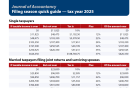
Want to stretch retirement funds and avoid tax pitfalls? This article shares tips and models for smarter drawdown strategies that maximize after-tax wealth, manage Social Security and Medicare impacts, and minimize surprises. Also see: Tax season preview and quick guide.
From The Tax Adviser
December 31, 2025
Practical tax advice for businesses as a result of the OBBBA
November 30, 2025
Digital asset transactions: Broker reporting, amount realized, and basis
October 31, 2025