Private companies are entering the final stretch of their preparations to comply with FASB’s new revenue recognition standard. Here’s how auditors can help their clients with the implementation process.
Advertisement
TOPICS
Accounting & reporting
New GASB guide addresses fiduciary activities
GASB issued a new implementation guide that includes questions and answers related to recently released GASB standards on accounting and financial reporting for fiduciary activities.
Revenue recognition tips for not-for-profits
Not-for-profits have their own specific concerns related to the Financial Accounting Standards Board’s new revenue recognition standard. Find out in this episode how the new standard applies to not-for-profits.
GASB proposes guidance on PPPs and APAs
The guidance is designed to improve accounting and financial reporting for public-private and public-public partnership arrangements. Comments on the proposal were requested by Sept. 13.
A refined approach to auditing accounting estimates
Auditing accounting estimates can be challenging. New auditing standards may help by encouraging deeper professional skepticism.
Tips for a smooth CECL implementation
FASB’s new current expected credit losses standard contains big implementation challenges for the financial services industry but also applies to companies in other industries.
FASB modifies definition of ‘collections’
New rules issued by the FASB align its definition of “collections” with that used by the American Alliance of Museums’ Code of Ethics for Museums.
GASB issues implementation guide
GASB issued an implementation guide that is designed to assist state and local government financial reporting personnel as they adopt and apply certain GASB statements.
Ask the expert: Technology in lease accounting
Donald J. Coduto is a KPMG Advisory leader for the firm’s implementation initiatives related to the new lease accounting standards and is assisting several large multinational organizations with their adoption of the new lease accounting standards.
FASB extends GAAP alternatives to not-for-profits
The new FASB standard allows not-for-profits to use alternatives on accounting for goodwill and accounting for identifiable intangible assets in a business combination.
GASB proposes guidance for subscription-based IT arrangements
GASB proposed guidance for state and local government accounting for subscription-based information technology arrangements.
FASB eases transition to credit losses standard
FASB issued new accounting rules that are designed to ease the transition to the board’s new credit losses standard by providing an option to measure certain types of assets at fair value.
FASB proposes simplifying accounting for income taxes
FASB issued a proposal that is intended to make accounting for income taxes less costly and complex.
AICPA committee requests delay in private company lease accounting effective date
Private companies are experiencing overload as they implement complex new accounting standards, according to the AICPA Private Companies Practice Section’s Technical Issues Committee.
SEC addresses ICFR attestation for smaller companies
The SEC voted to propose reducing the number of public companies required to obtain an attestation of their internal control over financial reporting from an independent auditor.
Credit losses standard tips for audit committees
FASB’s new standard for recording credit losses presents a huge change to accounting for financial institutions, and affects other organizations as well. A new tool helps audit committees in their oversight of this important implementation.
SEC proposes changes to disclosures on acquisitions and disposals
The SEC proposed rules changes designed to make disclosures less costly for acquisitions and disposals of businesses while preserving valuable information for investors.
New GASB guide assists with implementation
A new implementation guide issued by the Governmental Accounting Standards Board can assist state and local governments as they adopt certain GASB statements.
Q&A discusses ‘direct care’ expenses for collections
A new Technical Question and Answer issued by the AICPA discusses the characteristics of expenses that would be considered “direct care of existing collections” under a new FASB standard that updates the definition of “collections.”
New FASB standard clarifies lease accounting issues
An update aligns new and existing guidance.
Features




SPONSORED REPORT
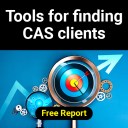
How to find the right CAS clients
The key to success with CAS is selecting the best clients. Tools like ideal client profiles (ICPs), buyer personas, and even artificial intelligence can help identify the businesses that best fit each CAS practice.
From The Tax Adviser
March 6, 2026
Navigating the Form 1099-DA reporting maze
February 28, 2026
CPA firm M&A tax issues
February 18, 2026
Why LIFO, why now?
February 10, 2026