I agree with the assessment of the letter writer regarding the FASB (“Agrees with Need for Change,” JofA, Sept.00, page 14). Some of the pronouncements are prime material for the repertoire of the Theatre of the Absurd. However, I do not believe the AICPA should be allowed to participate in
Advertisement
TOPICS / AUDIT & ASSURANCE
Audit
ISB Issues Employment Standard
In July the Independence Standards Board reaffirmed its earlier (June 1) approval of ISB Standard no. 3, Employment with Audit Clients. The guidance addresses independence concerns and updates rules for situations in which a professional or partner of an audit firm decides to join an audit client. According to the
JofA Not Just for Accountants Anymore
I recently spent a couple of hours in an after-hours medical clinic, waiting to see a doctor. There, I found a copy of the JofA. Even though I’m not in the accounting field, I really enjoyed the magazine. In particular, I recall reading a useful article describing how to generate
Charities and Form 990
As a specialist in the not-for-profit industry, I found “Selecting the Right Charity ( JofA, Sept.00, page 19) most interesting. However, there are two issues mentioned I would like to address. The article suggests that the annual information statement, IRS form 990, “doesn’t break down fundraising and operational costs.” Although
A New Standard of Tax Practice
EXECUTIVE SUMMARY THE AICPA HAS ISSUED EIGHT STATEMENTS on Standards for Tax Services as enforceable standards for AICPA members. Effective October 31, they replaced the advisory Statements on Responsibilities in Tax Practice. COMMENT LETTERS RAISED QUESTIONS ABOUT the necessity of enforceable tax practice standards. The strongest argument for enforceable
Paying the Piper: Some Tax Rules for Daytraders
TAX BRIEF INDIVIDUAL One of the new vocations of the Internet age is day trading; it is characterized by traders’ rapidly buying and selling securities to take advantage of small movements in their value and liquidating the portfolios by the end of the trading day. Coverage in the news media
Another Look at FASB Interpretation 44
A comment in “FASB Offers More Guidance on Stock Options” ( JofA, July00, page 18) suggests that the inability to reprice options could cause a company to lose all its employees if the value of its stock declines and is not likely to go up in the near future. I
Tax Services Standards Issued
TAX NEWS In late July the AICPA tax executive committee approved as final eight Statements on Standards for Tax Services (SSTSs), which superseded and replaced Statements on Responsibilities in Tax Practice. (See “Standards for Tax Services Proposed,” JofA, June00, page 77.) Although the substance of the rules contained in each
Additional Concerns
“Beyond Section 1031” ( JofA, July00, page 61) was an excellent summary of some of the complexities surrounding this code section and provided practical solutions to construction and reverse exchanges. I offer two other concerns for advisers to consider: State taxation. While California and Idaho, for example, allow a replacement
Corporate Acquisition Issues
TAX CASE In today’s economy, many business owners—both large and small—are considering buying other companies or selling the one they own. A recent case addresses some of the issues that may arise when the acquisition is structured to take advantage of opportunities in the financial market. Jordan Co. negotiated the
LMSB Deputy Commissioner Stresses Fairness for Taxpayers
TAX NEWS In a recent interview with the JofA, Deborah M. Nolan, CPA, IRS Deputy Commissioner of the Large and Mid-Size Business (LMSB) division, spoke of the service’s strategic goals that would make filing returns easier and increase fairness of compliance enforcement. When asked specifically how she planned to improve
Some Were Omitted
“New Rules, New Responsibilities” ( JofA, Aug.00, page 53) deals with questions arising from only some of the important new audit committee rules resulting from the SEC’s “blue ribbon committee” initiative. There are other rules companies might need to consider. For example, the article omits discussion of the newly articulated
Don’t Forget the Consultant
As a Web designer and the spouse of a “finance guy,” I enjoy reading his copies of the JofA for the technology information. The article, “Launch a Web Site—Now” (June00, page 22) was very informative although it omitted any discussion on servers, server software and the programming it takes to
Taking Account: Key Dates for the Profession
he accounting profession has made remarkable progress since its early days, when practitioners struggled to establish credibility. An examination of some of the most important events during the first nine decades of the 20th century offers a glimpse into what has made the profession what it is today. Although
A Historical Look at Standards
Letters Some Were Omitted “New Rules, New Responsibilities” ( JofA, Aug.00, page 53) deals with questions arising from only some of the important new audit committee rules resulting from the SEC’s “blue ribbon committee” initiative. There are other rules companies might need to consider. For example, the article
SysTrust and Third-Party Risk
EXECUTIVE SUMMARY THE SYSTRUST ASSURANCE SERVICE ALLOWS CPAs to add a level of confidence to the reliability of corporate IT systems, but carries with it litigation exposure, especially from third parties. COURTS HAVE NOT YET SPECIFICALLY addressed the third-party legal ramifications of SysTrust because it is so new; but
Peer Review For Small Firms
EXECUTIVE SUMMARY THE AICPA REVISED ITS STANDARDS FOR PERFORMING and reporting on peer reviews for firms that do not audit SEC registrants. The new rules, which become effective January 1, 2001, are designed to improve the quality of financial reporting and to protect members of the public that use
International
IFAC Issues Reporting Standards for World Governments In May the International Federation of Accountants released the world’s first authoritative set of independent financial reporting standards for public-sector entities. Known as International Public Sector Accounting Standards (IPSASs), the IFAC guidance is derived from the International Accounting Standards Committee’s International Accounting Standards
Those Who Can—Teach.
EXECUTIVE SUMMARY THE TIME IS RIGHT FOR MAKING A MOVE from the business world to academia as increasing enrollment and other factors help create new positions. BEFORE EMBARKING ON AN ACADEMIC CAREER, practicing CPAs should be aware that academic life is very different. It has special rewards—such as flexible
Government Accounting
FASAB Amends Standards for Federal Loans and Loan Guarantees In May, the Federal Accounting Standards Advisory Board issued two pronouncements dealing with federal agency loans and loan guarantees. The intention of Statement of Federal Financial Accounting Standards no. 18, Amendments to Accounting Standards for Direct Loans and Loan Guarantees, is
Features




SPONSORED REPORT
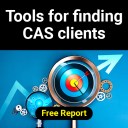
How to find the right CAS clients
The key to success with CAS is selecting the best clients. Tools like ideal client profiles (ICPs), buyer personas, and even artificial intelligence can help identify the businesses that best fit each CAS practice.
From The Tax Adviser
March 31, 2026
Current developments in taxation of individuals: Part 1
March 31, 2026
Current Developments in Taxation of Individuals: Part 1
March 6, 2026