- podcast
- NEWS
Why 2026 is another ‘big tax year’
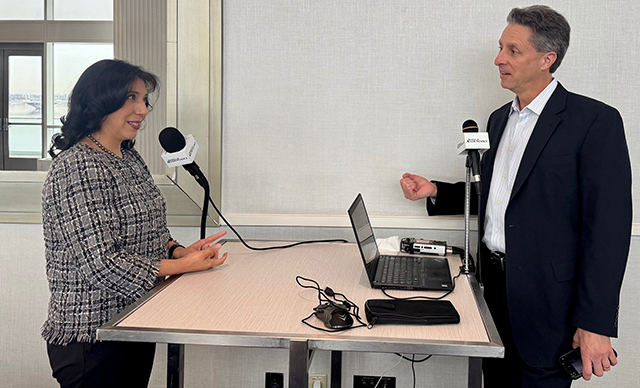
Melanie Lauridsen, the AICPA’s vice president–Tax Policy & Advocacy, joined the JofA podcast on Tuesday from the Digital CPA Conference, offering context on the most recent government shutdown and on how a potential shutdown early in 2026 could affect IRS services.
The interview was conducted one day after the IRS released guidance for health savings accounts. Guidance related to H.R. 1, P.L. 119-21, the law commonly known as the One Big Beautiful Bill Act, was also part of the conversation.
In the Q&A, Lauridsen touched on the AICPA’s areas of advocacy focus for the new year and why 2025 and 2026 are big tax years.
Resources:
What you’ll learn from this episode:
- Lauridsen’s analysis of IRS guidance on new tax provisions in H.R. 1.
- The impact of the 43-day government shutdown on IRS operations.
- Concerns about taxpayer service and staffing as the filing season approaches.
- AICPA advocacy priorities for the year ahead.
Play the episode below or read the edited transcript:
— To comment on this episode or to suggest an idea for another episode, contact Neil Amato at Neil.Amato@aicpa-cima.com.
Transcript
Neil Amato: Welcome back to the Journal of Accountancy podcast. This is Neil Amato with the JofA, recording at Digital CPA, National Harbor, Md. It is Tuesday, Dec. 9.
Melanie Lauridsen is again, our guest on the podcast. She’s the AICPA’s vice president–Tax Policy & Advocacy. Melanie, glad to see you in person and glad to have you back on the podcast.
Melanie Lauridsen: Absolutely, and thanks for having me.
Amato: When we last spoke in early October, remotely, as this is our first in-person recording, it was just as the government shutdown that would last a record 43 days was beginning. The headline on that episode — I’ll tell you in a bit why I’m bringing that up — was, “Shutdown Concerns, the Quest for Tax Guidance, the Future of IRS Service.”
I want you to go over three aspects of that as we look ahead. First, shutdown concerns. I’d say they remain very real. Tell me what are some of the things that tax practitioners and taxpayers should know about that.
Lauridsen: Let me start by saying, and I think I’ve said this 100 times and people are probably annoyed with me saying this over and over — there are no winners in a shutdown. No one, not the taxpayers, not the government, not the IRS, nobody.
With that in mind, unfortunately, the IRS is still in the process of assessing what that shutdown means to them as far as processes and procedures. We do know that the IRS is fully open and functional and operational, and they are moving forward, and we’ve seen a lot of things moving within the IRS which we can talk about later.
Having said that, there are delays. Inevitably, there are going to be some backlogs that are coming from that. As far as the taxpayers, I think the biggest questions that they have are twofold. The first one is, will the IRS start the filing season as their usual start date, which is around the Martin Luther King date, and will the IRS provide the guidance that is really needed to be implemented for this filing season coming up?
Amato: Again, as you say, those shutdown concerns in the middle of filing season, very real. February is the heart of filing season, I would say, or at least the heart of the start of filing season, and the IRS is only funded right now through Jan 30. Is that correct?
Lauridsen: That is a very real concern that people have. Again, there’s not ever a good time for a shutdown, but Jan. 30, the start of the filing season, and this is, like you said, the most amount of people where they will be calling, where guidance is still up in the air, or there’s no clarity even if there is guidance and people aren’t caught up to speed.
You know there will be phone calls, you know there will be a lot of writings, you know people will have issues, and so it would make it a really terrible time for the government to shut down again during this period.
I’ll also say, now, the contingency plan could change, but if you look at the existing contingency plan, it is valid through April 30, which means if we were to go into a shutdown, we would see almost half of the organization shutting down during the time of most need for taxpayers.
Amato: The second part of that October headline, the quest for tax guidance. With multiple new provisions in H.R.1, P.L. 119-21 — I like to say the whole name — the law commonly known as the One Big Beautiful Bill Act, or OBBBA, it was especially important that guidance come out in timely fashion. Where do things stand on that front with guidance related to the sweeping new tax provisions in that law?
Lauridsen: Neil, as always, we would love to see guidance earlier rather than later, and that applies to any year, any time, whenever guidance is needed. The shutdown wasn’t ideal for it, but having said that, the IRS actually, during the shutdown, they brought back 45 people into the IRS’s Chief Counsel [Office] to be able to continue working on guidance. And we do know they were still working on guidance. And soon after the shutdown, we started to see guidance dropping. We’ve seen the no tax on tips, the no tax on overtime.
We already know that car loan deduction is already being looked at to be issued soon. We know international provisions have come forward. We definitely are seeing the IRS move forward with it, but again as always, the sooner, the better.
Amato: The third part of that headline, the third part to address, the future of IRS service.
Lauridsen: Yes.
Amato: With staffing lower than in the past, what are the specific concerns as we near the beginning of tax filing season?
Lauridsen: Neil, we always do have concerns as we are nearing the start of the tax filing season, particularly taxpayer services, and that has been a long-running issue that the IRS has had and has struggled with in the past. In theory, the concept is with less of a workforce, you would see more digression in those services being provided to taxpayers.
Having said that, the IRS has been very careful to maintain their service levels consistent to what we’ve seen in prior year, but the IRS does prepare at least a year in advance for a filing season, so what it means for this filing season, we don’t know.
TIGTA, the Treasury Inspector General for Tax Administration, came forward with their report saying that they are very concerned with the ability for the IRS to deliver a smooth 2026 filing season.
We also know from other information that we’ve had from former commissioners that they don’t see how it can work because, when they were preparing for a filing season to provide taxpayer services, they’ve said that every minute counts. And then you have the shutdown and a reduced workforce, how does that play into it?
It definitely is something that we’re keeping our eye on. And I finally add that we did just see the Senate proposals for funding for the IRS, and in it, they did do a 4% budget cut to the IRS. However, they increased the taxpayer services by 15%, so they’re trying to balance it out, and they are trying to deliver taxpayer services.
Amato: You mentioned some of the comments of former IRS commissioners. A few weeks back at the AICPA National Tax Conference in Washington, that was where some of those commissioners were speaking, along with National Taxpayer Advocate Erin Collins. What are some of the themes that emerged from their sentiment at that conference?
Lauridsen: With all of them — like you said, we’ve had former commissioners, like former Commissioner [John] Koskinen, he actually was the one who set up shutdown implementations, but not just for the IRS but across all the government agencies. And then we have someone like Doug O’Donnell, who had been with the IRS for such an extended period of time. He has lived through shutdown [after] shutdown. And then, of course, we had Danny Werfel, who actually was there and had to put together the contingency plan as to who was essential and not.
We did get lots of insights at that time, but the overarching theme was one of concern as to how the IRS is going to be able to pull this off, the morale of the employees not being positive. But then they also ended with a positive note of saying that, somehow, the employees manage to pull it off year [after] year.
Amato: To close out this episode on the topic of advocacy, what are a few items that listeners should know are areas of focus for the AICPA both now and into 2026?
Lauridsen: The AICPA is obviously going to still be concerned about the implementation of H.R.1 and making sure that those proposals, when they come into fruition, that people have the information and the guidance they need, and then, of course, that it’s the right guidance where it’s not overly burdensome.
And actually, we do submit comment letters for a lot of these pieces, and we actually submitted something for the no tax on tips and the overtime. The IRS actually listened, and when they came out with their notices, they used a lot of examples that were based on what we provided to them. So that is a priority to continue that work.
We are also working with digital assets, where there will be new procedures and implementations coming up with this filing season, and we think that people are woefully underprepared to understand what those requirements are, and so we definitely have resources on that front.
We’re also keeping our eye on the Taxpayer Assistance and Service Act discussion draft, so the TAS Act discussion draft, where there were many proposals there that were for tax administration. It was bipartisan. And we’ve actually seen a lot of the different positions become stand-alone bills and become law, like the math error authority, which really requires the IRS to provide clear language in their notices. So all of these pieces together and, of course, anything that were to arise will become priority as we move through the year.
Amato: Melanie, when we first talked this year, it was in January, and the headline on that podcast was, “A Big Tax Year.”
Lauridsen: It is.
Amato: I’d say that came true.
Lauridsen: Yes.
Amato: Would you like to assess 2026 on that front? You know, how does it rank?
Lauridsen: I think it’s still going to be a big tax year. And I love that question because people oftentimes think that it’s about the law, but, yes, that year was about getting the law passed. But Year 2, which is 2026, is about implementation of that law. So again, big tax year.
Amato: That’s great. Melanie Lauridsen, thank you for being on the podcast.
Lauridsen: Thank you for having me.