Rise2040: Envisioning the future of accounting and finance
The acclaimed futurist guiding the Association’s Rise2040 visioning project explains how to anticipate — and prepare for — the next 15 years.

Daniel Burrus has quite a history as a futurist. Over the past 40 years, the New York Times bestselling author has delivered keynote speeches at more than 3,000 conferences worldwide, advised numerous Fortune 500 executives, and foretold scores of technology and business developments.
These predictions have not come via a crystal ball. They are the result of a methodology Burrus developed to identify trends and use those to anticipate what is most likely to happen in the coming years.
His anticipatory business model is a big reason why the Association of International Certified Professional Accountants has teamed with Burrus on Finance and Accounting 2040: Rise to the Future Together, an ambitious attempt to envision what the world might look like in 2040 and what accountants in firms and finance departments may do to guide the profession to continued success over the next 15 years.
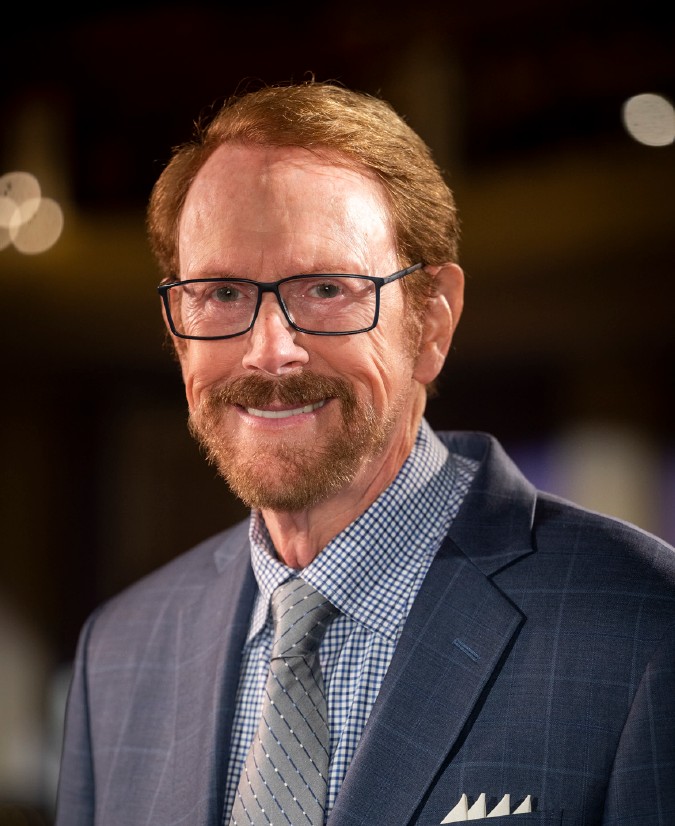
(Photo courtesy of Burrus Research)
The AICPA has twice conducted visioning projects like Rise2040. The 1997 CPA Vision Project gathered more than 3,000 CPAs in 200 focus groups to plot the profession’s path through 2011. That report established a new purpose statement for accounting: “Making sense of a changing and complex world.”
The subsequent Horizons project collected insights from 5,600 CPAs. That report reaffirmed the purpose statement defined in the Vision project and made incremental adjustments to guide the profession through 2025.
Rise2040 differs from the previous projects in that it will provide perspective from accountants worldwide. The bringing together of the AICPA and CIMA to create the Association in 2017 has broadened the horizons for visioning beyond U.S. borders.
RISE2040 SO FAR
Information gathering for Rise2040 kicked off with focus groups held at the AICPA Council meeting in May, the CIMA Council meeting in June, and the July meeting of the AICPA’s Major Firms Group, which includes leaders from the 100 largest firms beyond the Big Four. On Nov. 10, Burrus conducted the first of a number of virtual future forums. Forums also have been held in Europe, Africa, and Asia.
The Association has trained 68 Leadership Academy alumni and 22 staff members to facilitate future forums inside companies, firms, and state societies. State societies are playing a large role, with 18 states having completed or scheduled dates for one or more future forums. Another seven are planning to participate, bringing the total to 25.
Through September, 20 facilitated sessions had drawn more than 975 participants, with more than 50 future forums scheduled between October 2025 and April 2026.
Preliminary insights from the sessions held thus far have:
- Identified artificial intelligence (AI), especially generative and agentic AI, as a catalyst for transformation.
- Embraced an anticipatory mindset using Burrus’s framework of hard trends vs. soft trends (explained in the next section).
- Emphasized the importance of improving the profession’s value narrative to attract young talent and the need for talent to upskill in areas like AI and success skills.
- Highlighted audit quality, ethics, and trust as non-negotiable as the profession navigates risks associated with AI, misinformation, regulatory complexity, and commoditization of compliance services.
- Confirmed that AICPA and CIMA members in corporate finance are seeing AI increasingly automate transaction-level work, freeing corporate accountants to adopt a much more strategic focus with forward-looking reporting and analytics (see “As Finance Duties Shift, CAOs Take On Strategic Role,” JofA, Dec. 1, 2025).
- Revealed that AICPA and CIMA members overwhelmingly hold an optimistic and empowered view of the profession’s future.
The official Rise2040 report is scheduled to be released in May 2026, but that won’t be the project’s end. The Association plans to continue updating it amid the increasingly rapid changes affecting the profession. AICPA, CIMA, and state society members will be able to access Rise2040 data and insights through a chatbot powered by Microsoft 365 Copilot on the Association’s Azure AI platform. The Rise2040 Copilot Chatbot will provide “real-time access to our research, curated insights, session materials, and interactive guidance,” said the Association’s Tom Hood, CPA/CITP, CGMA, executive vice president—Business Growth & Engagement, who is working closely with Burrus to lead Rise2040.
THE FUTURIST’S PERSPECTIVE
In an interview with Jeff Drew, JofA editor-in-chief, and Oliver Rowe, FM magazine editor-in-chief, Burrus explained the differences between hard trends and soft trends and why rapid change makes it imperative that organizations adopt an anticipatory mindset as opposed to relying solely on reactive approaches.
His responses have been edited for length and clarity.
Predicting the future: Anticipatory vs. agile models
Burrus: There’s a lot of things that you and I don’t know about the future. Instead of looking at what we don’t know, I’ve developed a methodology to teach others how to ask, what do we know? What are we certain about? Let me frame this by giving some foundational information.
We are in a period of time where we’ve never had more uncertainty. Uncertainty does not empower anyone. What it does is it makes you wait, makes you hesitate. Certainty, on the other hand, gives you the confidence to make bold moves. What I’ve developed is an anticipatory business model versus an agile/reactive model.
Agility is what most businesses are using right now to try to deal with a rapid pace of change. The more agile you are, the faster you can react, the better. Now, the problem is we have technology-driven change increasing at a beyond exponential pace.
Only relying on agility, a reactive strategy, is going to be less valuable as you go forward.
I want you to be agile, to react fast. But if that’s your only strategy, you’re increasingly in trouble. The other part of the strategic coin is to be anticipatory. That turns disruption into a choice. There’s no middle. You’re either going to be more relevant or less relevant.
Secondly, you can see problems before you have them, so you can pre-solve them.
Hard trends vs. soft trends
Burrus: There’s no shortage of trends. The problem is, which ones will happen, and which ones won’t? I’ve come up with a solution for that. All trends fit into one of two categories. They’re either a hard trend based on a future fact that will happen. The litmus test for that is, if it can be changed, it’s not a hard trend.
The other kind of trend is a soft trend, and it’s based on an assumption that may or may not happen. I didn’t say it won’t happen, but it is an assumption-based trend, and it may or may not happen. When you’re planning for the future, knowing future facts is really important. By the way, I love both. What do I love about a soft trend? If you don’t like it, you can change it.
There are three categories of hard trends: demographics, regulation, and technology.
Let me give you a demographic example. A lot of people in our firms [and companies] globally right now, they’ll be retiring. That’s a hard trend, it will happen.
They’ll take their knowledge and wisdom with them when they leave. That’s actually a soft trend. You can do something about that. For example, you could create a formal mentoring program instead of having one that’s [informal and] optional.
You could focus on training the next-gen leadership with new skills that they will need that they didn’t need five, 10, 15 years ago. And if we look at hard trends, we can start to see what those skills are.
A trend by itself is academic. Who cares until you attach an opportunity to it. The minute you attach an opportunity to a hard or soft trend, it bursts into actionable life. When we define the opportunity for our organization, we can actually have the confidence to make a bold move on that.
There’s no such thing as artificial wisdom. We’re going to lose a lot of it. But we don’t have to. That’s soft. We could develop a strategy, so that we can start pulling that knowledge and wisdom from them before they leave, thus creating a knowledge base and a wisdom base.
Distinguishing between hard and soft trends
Burrus: If it can be changed, it’s soft. If it can’t be changed, it’s hard. Let me give you some more examples. There are Baby Boomers in many countries, large numbers.
When we are trying to recruit younger people for this profession, most of us have a one-size-fits-all recruiting strategy that we go to campus with or that we use on social media. Every demographic uses different technologies. They all think differently. They respond differently. If you customize your outreach program, for each specific demographic and how you’re reaching them, you’ll get far better responses.
Obviously, AI is a hard trend. It is not going away. It’s getting exponentially more powerful, but it’s not the technology, it’s how we use it that matters most.
Exponential growth of AI and automation. Pretty easy to say that’s a hard trend. But now, I’ll give you an example of some opportunities. Just some quick examples. Shift CPAs from compliance to strategic advisory roles. Upskill employees in AI tools as another opportunity; automate routine work to increase value delivery as another opportunity. Use agentic AI to automate workflows.
When you identify a hard-trend future fact, and you put some time frames on it, you realize that the cost of not taking action now becomes a higher cost than the cost of taking action. You have a shift in thinking. When it comes to hard trends, if you don’t act on [them], can you be sure that no one else will?
New competitors will see that you are losing relevancy and market share. They’ll see your weakness. That means they can come in and steal your customers. You’re using old tech and legacy thinking. When you start realizing that the cost of the no, not taking action, is higher than the cost of the yes, then you start realizing we need to say yes to making the changes now. That’s one of the things that’s different — by putting this into a hard-trend/soft-trend analysis, that lets people see opportunities and puts urgency to it. Now you start getting people in the organization to be confident in taking action.
You can lose what you defend
Burrus: When you start identifying hard trends, you can see much farther out, it’s hard not to take action. Because now you have certainty. A wait-and-see attitude is very dangerous today. We have two ways of looking at trends. There’s a mindset of protect and defend the status quo. The opposite of that is what I call the embrace-and-extend mindset, where you embrace the new hard trends and you extend their reach to increase your relevancy and accelerate innovation and growth.
A classic example, Research in Motion. They put out the BlackBerry. It allowed us to take care of our emails and have our calendar and our contacts on a mobile device. That was a change. When the iPhone came out, Research in Motion did not anticipate the transformational impact the iPhone would have as a hard trend, so they took a protect-and-defend strategy.
They had a giant global user base and a highly secure wireless network. If they would have integrated Apple-like features into the BlackBerry, we might all be toting around smart BlackBerrys today.
Opportunities for accounting as AI expands
Burrus: In this profession, we have high levels of trust. We need to elevate and leverage trust because we live in an increasingly technological world, but we also live in a human world that’s based on relationships. We all know there are good and bad relationships. What’s the foundation of a good relationship? Trust.
Today, there is a perceived decline in soft skills and critical thinking. This is another soft trend we can take advantage of. The good news for all of us humans is that soft skills are what AI doesn’t do well. Being really good at collaboration, communication, strategic listening, critical thinking, and being really good at creating relationships are examples of soft skills we all need to get better at.
Another hard trend is that we have a major productivity revolution taking place with AI right now. We’re able to get the lower-level tasks automated very easily and very quickly so that all of us can do higher-level activities. That productivity revolution is already happening right now.
If you look out to 2040 with the hard trend of AI, you would see that we could do everything that we do today in five hours instead of 40 hours. What would we be doing with the extra time — having a super short workweek? We will finally have time to create higher-value products and services for our clients [and customers].
We’re going to transition to more of an advisory role, as AI automates many of today’s services. There opens up a whole world of opportunities for us.
AI is not a human. It is a machine. It can try to simulate us, but humans are pretty good at detecting what isn’t a person, even though AI can look and sound pretty good. The higher levels of the cognitive domain — analysis, problem-solving, synthesis, empathy, relationship building, and so on — is going to be a key for us humans.
The relationship between humans and AI will be symbiotic. For example, if you knew someone that had cancer, he would probably have to go to an oncologist. Right now, AI knows more about cancer and cancer research and cancer studies than any living oncologist. Thinking of that person with cancer, I’m going to give you three choices. Choice number 1 would be a really good oncologist. Choice number 2, just AI. Choice number 3, a really good oncologist that has access to AI. There’s our future. AI augmenting our thinking, with humans at the center of the relationship.
About the authors
Jeff Drew is the JofA‘s editor-in-chief, and Oliver Rowe is editor-in-chief of FM magazine. To comment on this article, contact Jeff Drew at Jeff.Drew@aicpa-cima.com.
LEARNING RESOURCES
The AI Advantage: Leveraging AI for Efficiency and Impact
In this fast-paced session, discover how AI-driven tools and strategies are revolutionizing workflows, improving decision-making, and driving business impact.
WEBCAST
The AI-Ready CPA: Leading Finance Through Change
This session will explore the key pressures shaping finance today, how AI is revolutionizing financial functions, and what CPAs can do to develop a future-ready mindset.
WEBCAST
The biggest event in the accounting profession will celebrate its 10th anniversary at the ARIA in Las Vegas. Don’t miss it!
CONFERENCE
Certified Information Technology Professional
The AICPA’s Certified Information Technology Professional (CITP) credential represents the intersection of technology and financial reporting. CITPs understand how information technology, accounting, and finance interrelate. Choose from three pathways to earn the credential. For more information, click on the headline above.
CREDENTIAL
For more information or to make a purchase, go to aicpa-cima.com/cpe-learning or call 888-777-7077.
MEMBER RESOURCES
Articles
“A New Frontier: CPAs as AI System Evaluators,” JofA, Nov. 1, 2025
“5 Essential Tactics of Future-Ready Firms,” JofA, Sept. 10, 2025
“Mark Koziel Q&A: Talent, Sense of Community, Profession Opportunities,” JofA, Aug. 28, 2025
“Gen AI at Work: Insights and Applications for CPAs,” AICPA & CIMA, June 26, 2025